Seth: The Jew saw them all, beat them all, and is now what he always was. All things are mortal but the Jew. All other forces pass, but he remains. What is the secret of his immortality?
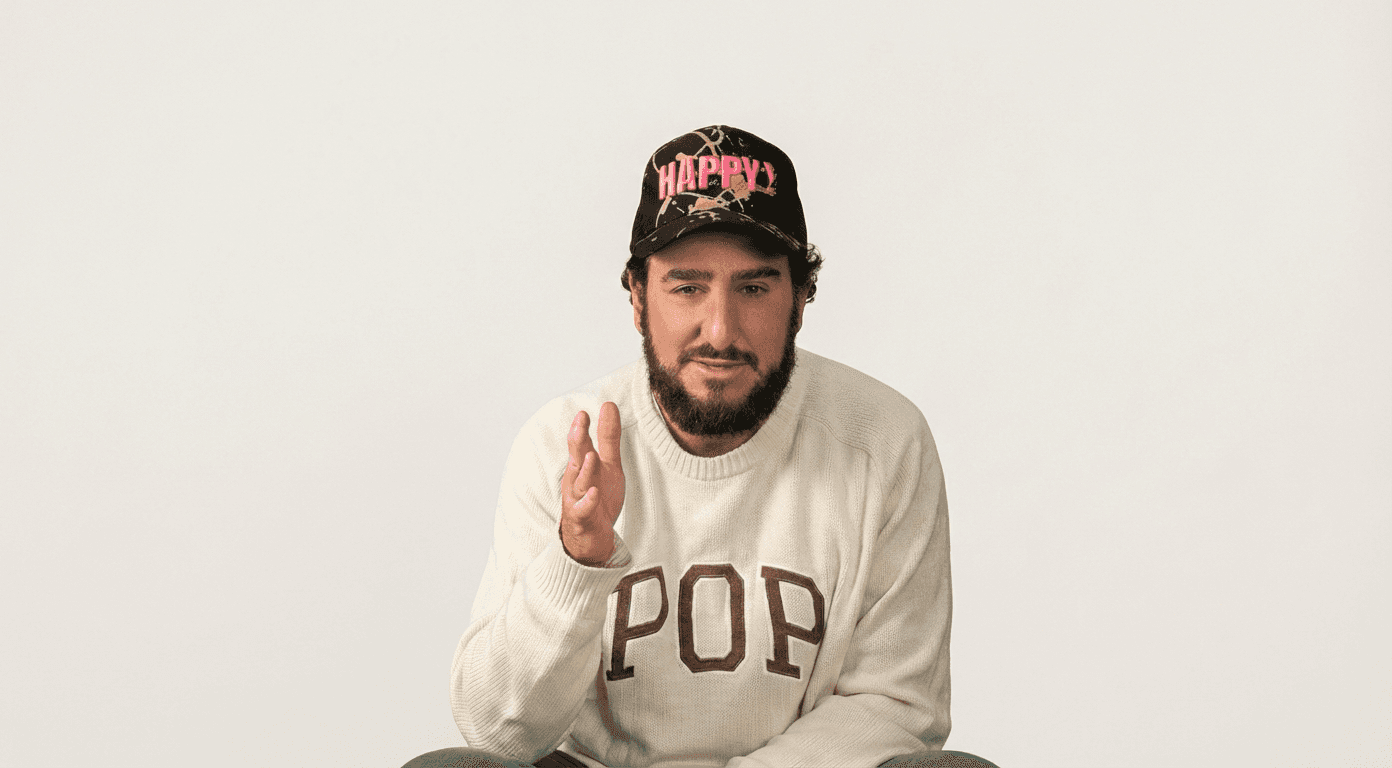
Lio: And we're live on TheJewFunction! Once again, I'm Lio, this is Seth, and with us today a very special guest — Adam King from The Adam King Show. You can see his logo there and everything on the bottom. Awesome Jew on X. Awesome Jew. He wasn't always Awesome Jew. He was a bunch of other things before. We'll hear about that. And it was very hard to — I feel like a lot of our guests are hard to pin down, but this one was especially hard to pin down. We finally almost didn't get him, and then we got him. So I'm very happy to have Adam on our show. Hi, man. How are you?
Adam: You've always had me. Ever since I got the invite — I love the Jew invites. I always take every Jew invite, no matter who, no matter who Jew it is. So as soon as I got your message, it was just a timing thing because you guys schedule far out in advance, and my schedule is always moving and bobbing and shaking. So sometimes it is hard to pin down. I apologize for that, but I'm really glad that I got here and I am sitting with you guys on TheJewFunction. I'd say before we start, let's bless God a little bit. Please. I don't know. Eloheinu melech ha'olam, shehakol nihiyeh bidvaro. Amen. Amen.
Seth: You guys are raising the sparks in the first three minutes.
Adam: Let's go.
Seth: He came to do business.
Adam: Came to do business. I don't mess around, man. I got a mission.
Lio: You got a mission. So I think that's a good place to start. What is your mission? Because I was trying to understand by watching some of the things you do, the places you go. You spent some time on Infowars. You talk about Jewish conspiracy theories. You talk about the Jewish soul. You talk about Israel. It seems like a lot of things are important to you. But what is your mission? Why do you do what you do? Maybe we'll start with that, just so people get to know you a little bit if they're not already listening to your show.
Adam: Great question. I appreciate it. Nobody really asks me why I do this stuff. But it's very simple to me. I do this because of the coming of the Mashiach. And everything I do is for Hashem. I make jokes all the time — I'm like, this is my midlife crisis. And it kind of is. It's a little funny. I like going online and getting into these super intense conversations. I love intensity. When the air is palpable and thick because the intensity is so great, I'm just alive. I feel invigorated. Sometimes when I'm in those really intense situations with controversial people that are against us that matter, that's when I feel so alive, like I'm serving Hashem. And I'm here because of Hashem. This is what He wants from me. And He's made the path super clear and easy and it builds itself. I don't do the work. I just show up and talk. And everything — so many events were just orchestrated by God. I can't even believe that they even happened to this day. I'm just like, did that really happen to me?
Lio: What are some of the crazy things that happened to you?
Adam: When Dan Bilzerian kicked the door down, when I did the Jake Shields debate — that was like a two-for-one. And then David Duke was chasing me because he wanted some relevance before he dies. That was a crazy one. It's every single time. Candace Owens blamed me for killing Charlie Kirk, which was four times. It was like, where is this coming from? I mean, it's from God. God wants this to happen. And God wants me to be a part of this equation in some capacity. And in the situation with Candace, it was a big turning point because there were a lot of people on her side that know me personally from all my experience and time spent in the anti-Semite sphere. And my phone blew up after the first time. It was very quick that everybody realized I wasn't at the Hampton Summit. I didn't even know about the Hampton Summit until Candace started talking about it. And then I remember — because it was right before Shemini Atzeret. As we were going into the last of the Chag, I was like — because it happened right during Chol HaMoed. And as we were going into the Chag, I was like, that was so crazy. The high was coming down, and she went on her show right before Yontif. It was like an hour before Yontif I saw it. And she doubled down after everybody — Elijah Schaefer, Milo, all these people were calling her saying, you got it wrong, dude, you got it wrong. And she doubled down. And then she doubled down in writing, and then she doubled down on the podcast again. Triple, quadruple down. And that was a big breaking point where people realized she's making it up. And once she has a part of the storyline and the grift, she sticks to it.
Lio: I think this plays very well into what we're doing here on TheJewFunction, because we think — and again, it's not just our thoughts. We've done a lot of research into it. We looked into historic patterns. We looked into the writings of Jewish sages over the years. We looked at even recent findings from network science. And there's a picture that's emerging. In that picture, people have this attitude toward the Jews. So the outer story almost doesn't matter. In other words, if they feel a certain way toward the Jews, they'll try as best they can to find a story that will help justify that inner feeling that they have against the Jew. So I guess my question to you is, from all of those different talks and the crazy encounters and just being in that bubble, do you feel like you are closer now to understanding why people hate the Jews? Why this thing is still a thing?
Adam: I think I always have had the answer to it, to be honest with you.
Lio: Okay, please enlighten us.
Adam: There are some people that hate the Jews because — at the top, nobody really hates the Jews. All the Jew haters at the top, none of them hate us. And the ones at the very top, the only reason why they become virulent against us is because they don't have access to us. They don't have any relationships with us. They don't have close Jewish — authentically Jewish — friends. People who are engaged in the Jewish experience. There's always that Jew in someone's life that will eat on Yom Kippur or something like that. But somebody who's shtarking in the Torah and has an answer for the tough Talmud question — all those things. And so from what I've experienced, after every time I've made a relationship with an anti-Semite, they became my friend. I showed up to every single debate in good faith, and I realized in this corner of the internet, the only way you lose a debate — and I've done maybe 50 of them, I don't know how many — but if you chimp out and if you rage quit, then you absolutely certainly lose. So in my debates, I try to come with comedy, and I don't try to be likable. Like I said, it's a midlife crisis for me. I'm just doing stand-up sometimes. But it works. Jews are funny people. And people realize through comedy that we're all just humans. We all laugh at things. If you can make somebody laugh, their heart is open, and you can pretty much convince them of anything. You just have to get to their heart chakra — open it up and let them feel good around you. And a lot of times the way we combat anti-Semitism is through anger. And this is the wrong approach. You go online and you see a lot of people and it's always, "F you" and "piece of shit" and so on. That doesn't work. That only makes them feel more rooted in their cause, because now they officially have a Jewish enemy. It's like a shooting war. But if you break down those barriers and you're just fun to be around and intoxicating to be around — just Jew yourself up, just be authentic — people like us. And I think that's what works. Letting people have access to me — I don't give people my personal phone number, I have a business phone number, but my DMs are always open, and I've made a lot of relationships. I don't want to take credit for anybody's awakening when it came to Candace, but I definitely think that the fact that I have a really solid acquaintanceship with Evan Kilgore, Owen Schroyer, all these people — it matters. It actually matters to be able to have a Jew in your life who can answer a tough question or provide a pushback. And without me in that system — before I came out as Awesome Jew and my only public face was on Infowars, Banned.Video — it was just an echo chamber. And I don't know why Alex came to X, because in those days at Banned.Video, before Alex got replatformed on X, Banned.Video was getting 20 million views a day. It was such a significant platform, but it was an echo chamber, and I was the only Jewish voice.
Lio: Wait, so how did you — just so people know — how did you end up on Infowars? And when you got there, were you there as a Jew? Did nobody know you were a Jew, or did they know you were a Jew but nobody on the outside knew?
Adam: Originally, my podcast started because I created a newspaper. My newspaper started because I've always been an activist, and I ran for Congress in 2014. When I ran for Congress, I started a newspaper and I loved it. It was so much fun. So years later, I started another newspaper. And immediately Ben Stein — you know, The World According to Ben Stein — picked me up and he said, "I want you to be my sidekick." So I basically put the newspaper on hold, and I was Ben Stein's sidekick for about a year. I pretty much brought him all his guests because I was always in the MAGA movement. I had deep roots everywhere. And I brought him a lot of guests. In the process, some of the guests had mutual crossover with Infowars. At the time, Rob Dew, God bless his soul, wonderful human being, was looking to expand the lineup at Banned.Video. And they were trying to get Ben Stein to have a show there. And so because I was the point of contact, I just started The Adam King Show. I said, "Hey, can The Adam King Show get on too?" And he said, "Yeah, we'll get The Adam King Show on too," because they were looking for people who were willing to stand with Alex at that time because of Sandy Hook. Other than that, I was censored, blacked out everywhere except for Ben Stein. I wasn't allowed to have a Facebook, I wasn't allowed to have an Instagram, I wasn't allowed to have anything. I was completely blacked out off the internet.
Seth: Because of why?
Adam: Censorship. I ran in 2014 as a — I felt like I was more Trump than Trump. When Trump came around in 2015, immediately as he came down the escalator, I was like, that's the guy. Because I was disgusted by the Republican Party in 2014 and the way that they treated me. The Republican Party of Los Angeles County — RPLAC — is basically people who never left high school. It's people stuck in high school mentality. It's a really backwards thing. They don't accomplish anything. They don't support candidates. And after I won the primary election — I was racing against Karen Bass, who's now the mayor of LA. And to this day, basically Pico-Robertson, the Jewish neighborhood, got redistricted into Compton, because Henry Waxman, 40-year congressman, was retiring. South Beverly Hills is the Orthodox Jewish belt, and they were going to vote conservative. Beverly Hills was going to go Republican, and they couldn't let that happen. So Elan Carr versus Ted Lieu was that year, and Ted Lieu is still the congressman. It was that year that they redistricted the Orthodox neighborhood out of Beverly Hills — I lived on Beverly Drive for crying out loud — and they redistricted us into Compton. So that was 2013. I got really pissed and I went out there and just started registering voters as Republican in Compton. I was going to Inglewood, into the most gang-infested neighborhoods. And that's how I got to know Tony Muhammad and Louis Farrakhan and those people in the Nation of Islam — from my congressional run. Because I was the only person that ever showed up. I was this Orthodox Jewish guy who literally shows up wearing a kippah wherever I go. So I'd show up into Crips and Bloods neighborhoods knocking on doors. You've got to be fearless sometimes. So that's how it all started in 2014, and then after my campaign, the Orthodox Jewish community was fired up for Republican politics in California. But there was a movement led by this guy named Amir Zendanam, who was a nobody and is still a nobody, and all these losers in the Republican Party joined his movement to make sure that Orthodox Jews didn't come and donate money and build up the 54th assembly district. They fought it with everything they had, and they won. They voted me off my central committee, and it was just so pathetic and lame and stupid. They chose to lose. They loved losing. That's what they are — the losers. The Republicans in LA County — it's the largest gathering of Republicans in the entire nation by the way, in any county — and they just love to lose. Republicans in California just love to lose. They can't find any more dignity. They're always trying to find dignified ways to lose — "I have to resign from this election, I was beaten by my better opponent." It's so pathetic. Shut up and go fight for something. So that was one of the starting points. I was a diplomat in Africa also. I've just been an activist my whole life. And today the show is how I do that activism.
Lio: Well, obviously you have a very particular flavor, and that whole story — although you gave some answers, it didn't really give me your take on why people hate the Jews. And that's fine, we'll get back to it. I'm curious — so you get into media, but then you're on the media but not as a Jew, right? Not openly —
Adam: I've always worn a yarmulke. I've never not worn a yarmulke on my show. I mean —
Lio: No, no, no, I see that, of course. But —
Adam: I didn't grow up Orthodox. I grew up traditional.
Lio: Okay, but then you sort of came out as this Awesome Jew. That wasn't always the case, was it?
Adam: I was very censored as The Adam King Show because the powers that be saw an organic thing that happened in the echo chamber of Jew hate. And I was the only Jewish voice. I was thinking about it the other night — I have worked with every single major anti-Semitic influencer in the United States. And if I haven't worked with you, it's because you're not big enough. Every single one of them — there was a time when I was trying to get action, even with Candace. I was trying to work with Candace. I remember when Rabbi Shmuley was coming out in the beginning and fighting with Candace and all this stuff was going down, I was trying to get attention. And nobody would give it to me. They put me in this harem category — "Yes, we all work with you, but no, we can't. We're at war with the Jews and you can disrupt it." So I started Awesome Jew. I started other anonymous accounts too. And Awesome Jew blew up. And it's just so hilarious to me that on one side they're interfacing with Adam King on everything behind closed doors, and then on another side they're fighting with Awesome Jew in the public domain — and it's the same person. And poof, voilà — the reveal of Awesome Jew. There are so many clips of Candace Owens talking about Awesome Jew, seething. "Awesome Jew, Awesome Jew." She went on Piers Morgan to talk about me. Shema Yisrael — are you serious? Are you serious? God, it's hilarious. It's Jewish comedy with God at its finest. It's siyata d'Shmaya on steroids. The whole thing is siyata d'Shmaya on steroids.
Lio: Okay, so we'll get to God in a second.
Adam: There's other things to mix in there too, like the red heifers and all that stuff.
Lio: Yeah, okay. We'll bring all these spices later. I just want to establish — because you spoke to all these different, as you said, all these big anti-Semites — we only had experience with a handful, but you met a lot of them. And I'm curious if you have a sense of why they hate Jews. Not you personally, because as you said, one-on-one, great relationship. But what is the obsession with the Jews? Why the hatred of the Jew? In general, why is this thing a trend? How can people really get so much mileage out of this hatred?
Adam: First of all, most of them don't really hate Jews. They're just doing it because they're professional edgelords, and the edgiest thing to possibly do is scoff at the Holocaust. So they're just edgelords. Most of them want to say edgy stuff. Some of them actually do hate Jews.
Lio: Okay, but hold on. They're speaking to a crowd. They're getting a response. They wouldn't do it unless they generated a response.
Adam: It's like an MKUltra thing. You could convince people of anything if you bombard them with images and thoughts and reasons and explanations, and you also control their access to information so that they can't even do research against it. I think the biggest takeaway about my debate with Dan Bilzerian was that we were both asking ChatGPT the exact same question. And Dan Bilzerian's ChatGPT was feeding him a Jew-hate narrative, and my ChatGPT was talking about the real causes of the USS Liberty.
Lio: Yeah, but ChatGPT is a recent addition to the mix.
Adam: I'm saying it's confirmation bias.
Lio: I get it. But hold on. You can go and meet a Jew today. This is not like the Middle Ages where you heard about them.
Adam: People don't have the inspiration to meet a Jew. Look at Tyler Oliveira. This guy could go meet any Jew. Jews are so kind and hospitable to him, but he's looking for clickbait. I don't think Tyler hates Jews. I just think he's looking to come up in the media sphere. There's a ton of money that supports it. Some people make millions of dollars in Jew hatred. That's alluring in and of itself. There's also a ba'al gaiva thing where people really want to be famous. It's what trends. And in order to trend on X, in order to have viral content on X, you have to join the trend. I hate it, but it's just something that you have to do. You have to say things that other people say — take the same story or post with a slightly different twist. And then it gets bigger and bigger and bigger. Maybe five people are the ones who lead that thing, and those five people get a million hits each, and underneath them they all get 100,000 views each. People are happy with what they get because the algorithms are loading content. The algorithms want Nazis to see Jew content and they want Jews to see Nazi content.
Lio: Fair enough. There's no question that we got to a place where technology really helps feed those particular desires on both sides.
Adam: The question is, who's programming that technology to do that and for what reason? That's the bigger question.
Lio: Well, if you're following your thread, it could just be anyone who has the capacity to make money off of it. Why not? The deeper question is not what's happening right now at this point in time, but why has this thing been a thing for so long?
Seth: Before social media, yeah.
Lio: Jews were a statistical anomaly in every area of life before modern-day technology and social networks and all that. We were an anomaly. I'm asking you about that anomaly. That's what I'm trying to get to. First, from the point of view of the haters, of the anti-Semites, the anti-Jews. "Anti-Semitism" is even a bad word for it. It's not an "ism" — it's an anti-Jew thing. So what is this thing sitting on? You can hate anyone you want. Why just pick on that group?
Adam: So there is an ancient hatred that is really based in Catholicism and replacement theology — also in Islam. That ancient hatred has permeated the ages time and time again. And then there's the modern age where things are very different. You have the advent of Protestantism and other isms that moved away from Catholicism. These were people who wanted to follow Jesus as intensely as they wanted in their own way, and they didn't want to be told how to do it. And they had to pay for the right to worship how they wanted in their blood. So there's anti-Semitism pre-America, and I like to say anti-Semitism post-America, because it's only in America where you have the freedom of religion. You could be anything you want here. You could be an atheist, you could be a Jew, you could be a Christian, you could create your own religion, you could do anything you want. It's one of the reasons why I think Mormonism is so special — it's inherently American. It can only manifest under the First Amendment. But yeah, America provides this other twist because the controls of the church were taken away from influence. There was still a lot of Christian influence, Catholic influence, but that Christian influence very quickly became pro-Israel and pro-Jewish. Once people removed themselves from Catholicism or replacement theology in the Jesus faith, they become more and more tolerant. It's almost as if their ancestral guilt of the Holocaust was removed by becoming Protestant, or the advent of Protestantism absolved them of a lot of the guilt of the Catholics. And that ancestral guilt drives a lot of anti-Semitism. People hate Jews because their parents hate Jews. It was so easy in the Middle Ages to convince people that Jews had horns on their heads. I can't tell you how many times in my life people have still said, "I thought Jews had horns," because they just never met a Jew. I grew up in white America with a lot of exposure — and a lot of exposure to anti-Semitism too at a very young age. I remember in fourth grade in public school, I had swastikas drawn on my desk. It was really early anti-Semitism that I really came to reckon with.
Seth: So that's not edge, rage, whatever you called that before, right? What is that? That's not the same phenomenon that you experience now.
Adam: Post-World War II anti-Semitism is very different than pre-World War II anti-Semitism.
Seth: I'm saying even when you grew up.
Adam: Yeah, absolutely. Now it's very different than when I grew up. That was just some dumb kid whose parents probably made fun of Jews all day because they were poor and felt bad about themselves. So the son saw a Jew. It was fourth grade — what does the kid know? He doesn't know anything. I remember in third grade, I had this friend — I think I was about nine years old. He was one of my best friends from sports. So we'd all go to each other's houses. And his mother pulled me into another room, sat me down behind closed doors, and told me that Jews are going to hell if I don't accept Jesus. Tried to Jesus-pill me. And it was a huge thing in the school and on the sports team. It's so messed up that they would do that, knowing that my parents were coming to pick me up in a couple hours. But they insisted because of some sort of indoctrination that told them that was socially acceptable. By the way, they were Catholics.
Lio: Yeah, I'm sure. Again, this is the religious slant. We get it. This was the ancient one, as you said. Then there was the racial slant, the whole ethnic Jew, and then what happened in Europe, and now it's the Zionist Jew. Just a different label. I'm glad that we got to this.
Adam: There is a distinction, and there's something that you have to know that's missing from your story. Now, this is something I cover a lot on my show when I don't have guests, and sometimes when I don't have guests, not a lot of people tune in. But that's where you get the real meat and potatoes of my messaging. That's what creates devoted fans — the stuff I do when I'm alone. So I did this entire exposé on Nazi families that survived World War II. Now, at Nuremberg — I'll ask both of you wonderful Jewish men — how many Nazis were prosecuted at Nuremberg? What do you think?
Lio: Don't look it up.
Seth: Maybe hundreds.
Lio: Yeah, I would say a small number. A hundred and something, I don't know.
Adam: It was 17.
Lio: 17?
Adam: 17 Nazis hung.
Lio: Wait, you say hung or tried?
Adam: That's what it was. Nuremberg — they tried them for war crimes and hung them and killed them.
Lio: Yeah, but I'm sure there were more than 17 that were tried.
Adam: Well, a lot of people were. So this is where I did my study. There's this wonderful book by a man named David de Jong. You should really try to get him on your show — he's very difficult to get on. But he wrote this book called Nazi Billionaires, which documented all the billionaires that Adolf Hitler made during the Third Reich. The Quandt family, the von Flicks, the Finks, the Reimanns — there are so many of them. Really, truly. The Porsches, the Piëchs — these families still exist today. So in the book, he walks through the Nuremberg trials and the actual firsthand evidence — all the notes from the U.S. military, which are all declassified. So you can see the questioning of the Quandts — Günther Quandt. The Quandts are the big one. They're still worth $36 billion today. So these are people who literally — and the Quandts — Magda Goebbels was a Quandt before she was a Goebbels. She divorced her husband and married Goebbels. And Harald Quandt, the son, was Goebbels' stepchild. Just to give you context of how interrelated the money is: people like to talk about the Rothschild bank controlling the world, right? Rothschild lost its main asset, which was the Frankfurt branch, in the Aryanizations of Jewish businesses after Kristallnacht in 1938. Louis Rothschild sold for 20 million Reichsmarks the Frankfurt branch — worth trillions of dollars — but he got to keep his life. The bank is currently owned by the von Fink family. And the bank is called Allianz Bank now — A-L-L-I-A-N-Z. They are paired with Merck — M-E-R-C-K — which is the largest Nazi company besides Daimler AG, which then became Mercedes-Benz. These companies still exist as juggernauts of industry. The money's there. And what was based on the Third Reich?
Lio: There's no question the money's there. But what are you saying? The same money that supports Nazism now supports anti-Zionism? And it's just the same?
Adam: It gets even more complex, because Adolf Hitler was actually quite a brilliant strategist. As the Third Reich was dying, he invested heavily into Arab dictatorships, like the Ba'athist Party of Iraq. And the CIA was involved in all of this. The CIA has tremendous Nazi roots. The Bush family — Prescott Bush was the founder of the CIA. And that guy is as goose-stepping as it gets. Also the OSS, the precursor to the CIA, had tremendous influence in Berlin. And the Nazis — that whole era of the beginning of the CIA and the OSS was all Operation Paperclip stuff, nonstop, left and right. By the way, ironic to know that a lot of the work that was Josef Mengele's was absorbed by Pfizer and a lot of the Nazi —
Seth: Brother, hold on. It's no surprise that the Creator of the universe has infinite creativity, right? Because at the end of the day, He's the one who does everything. And we can go back — you're telling an incredible story, and it probably could go on — I would like to hear all of it. And we could do the same thing that happened in Rome, the same thing that happened in Egypt, and in Greece and in Persia. At the end of the day, the Creator is running this whole show. There's nobody who can do anything against Him. So we have a problem to solve.
Lio: Basically the question is, why is it happening again? Why?
Seth: Well, to what end? Maybe — why would a benevolent Creator be doing this? What do we have to — what's — first of all, He has His dream.
Adam: But the reason can be found in Ezekiel 38. The entire conflagration that happens with Gog is all only so that the Creator is revealed. He's very explicit. He's only doing these things to reveal Himself.
Seth: There we go.
Adam: So backing up — when we look at the rise of anti-Semitism in the modern age, you can't assume that this is organic. This is incredibly bought and paid for by old Nazi money. And that's why —
Seth: It's also bought and paid for by the Lord. He also says in Exodus from Egypt, "I'm going to harden Pharaoh's heart so that I can show my signs and wonders." I have to do this in order that I can do that. So you can say it's Nazi money, you can say it was the Pharaoh. But the Creator said to Moses, "Come to Pharaoh. Let's go together." He set up the whole show. He gave the Nazis their costumes. He wrote the script. So it's true that the Nazis are the main characters in this part of the story. But still, behind that, what's the meaning? At the end of the day, what can we do about it? What's our role?
Lio: Let's talk tachlis, Adam. You're a busy guy.
Adam: I see it as it's just about Mashiach at this point.
Lio: Okay, so tell us — what is Mashiach to you?
Adam: Half the Jews live in Israel. American Jews are very comfortable.
Lio: Not anymore. They're getting a little uncomfortable right now.
Adam: They can't do any of these anti-Semitic things — every time it causes the Jew to move. And when the wandering Jew moves, he eventually finds his way home in Israel. So I don't know if that's why this is happening in America, but I also think America is different than the other nations that we have been exiled in, because of its Constitution. The Constitution of this country has divine influence. It has an ability to affect divinity from below because of the freedom that it gives. God loves freedom. It's only through absolute freedom that God knows if you truly want Him or not — or if you're just doing it because your parents told you to, or because you fear punishment. In the Christian sense, they literally fear hell. Their whole religion is based on the fear of hell. There are so many thousands of changes — their liturgy has changed so many times in the last 2,000 years, unlike the unchanging Torah that's never changed once since it was given. Their religion is not based on liturgy. It's based on hell. They fear going to hell. And Judaism has a hell, but hell is only an 11-month sentence at the longest. So how do you rectify eternal heaven or eternal hell? That's a major divide between Christian and Jewish faiths. The belief in the afterlife is different. That also ties back into my work with the red heifer. Because we did the red heifer, I have the ashes, and I'm actually in the middle of my process right now of tahara from the parah adumah. I'm going to be the first human in 2,000 years that has been metaher from death, from the influences of death. And actually today is my last sprinkling. I just sprinkled the rest of the group I did it with before I went on this show, and I really wanted to focus my kavana. I was running to get to your show, but I wanted to do the sprinkling on them so that they can go home. So I'll do myself later so I can have proper kavana.
Lio: You want to tell people who are listening?
Seth: Yeah, tell us what the heck you're talking about.
Lio: Yeah.
Adam: The red heifer.
Seth: A lot of people read about it in the Bible, but they don't know what you're talking about.
Adam: So we have brought five red heifers to Israel. And on July 1st, we performed the Red Heifer Ceremony amidst abnormal opposition. And now the opposition has resorted to lying, and it's just so sad. What the Sanhedrin did publicly was sad — a fake Sanhedrin. Technically, you can only have a Sanhedrin if you have the consensus of global Jewry. So it's not even a real Sanhedrin. They were there and the Temple Institute was there too. And the things that they have done after the fact have been really just sad, and it highlights the fact that in this world, the Torah gives us things to do and things to not do. Many people are hesitant to do things that the Torah asks of us, and many people are hesitant to not do things that the Torah asks us not to do — like keeping kosher. Don't eat pigs. Some people just don't want to do it. They want to eat their pig. And some people have the red heifer and they don't want to do it. They had it for years and they didn't want to do it. And then it got done by somebody else and they got upset. So they want to invalidate it because the Temple Institute wants to be the only voice of Temple sovereignty. And that's a whole thing going on.
Lio: So you're getting into Torah politics, and we just wanted to hear about the red heifer.
Adam: The red heifer is a mitzvah aseh. We sacrificed the red heifer on July 1st. After we sacrificed the red heifer, I spent a significant amount of time caring about what other people thought — having to validate or invalidate someone's opinion, halachic debate after halachic debate. And it caused me to sleep on the mitzvah, which I don't like. So I said, enough of this satanic distraction. And I made mei chatat, which is the waters of purification. I didn't make it — I had a Kohen make it, because a Jew is not allowed to make it. Only a Kohen can make mei chatat. But any Jew can sprinkle mei chatat. And what it is: basically, if you've ever been around a dead person, or you've ever seen a corpse, or held someone's hand as they died — a loved one — or even if you were just in the same room as a casket with a corpse in it, like at a funeral or a cemetery, you receive this thing called tumat mavet — the impurity of death. Really what it is, it's called a makif mavet. It's an enveloping energy of death that doesn't allow for — it holds the consciousness of a person in death. They make decisions around death. How many of you are planning for retirement? That is literally making a decision based in the fear of death — "Oh, getting up there, time to start saving those pennies till I die." It's literally making decisions based in death. So the consciousness gets warped by the exposure to death. What this ritual does is it removes the impediment of death from the consciousness. So I'm on day seven of my seven-day cleanse. We're supposed to sprinkle on day three and day seven and then go to the mikvah. And I'm on day seven, and what I've experienced has been absolutely transformative. By going through this procedure, one does not receive prophecy, one does not receive miracles — one just becomes eligible. And it's through that eligibility that miracles and nevu'ah and Ruach HaKodesh and all sorts of other things become much more easily accessible and attainable, because we don't have that impediment — that fear, that stifling of death upon us. So the red heifer — it's such a big deal. Let's go. The thing in the ecosystem of anti-Semitism that got me on this path was the red heifer became this galvanizing thing. They were saying it's going to usher in the Antichrist and bring about the apocalypse. And that literally mobilized millions upon millions of people to hate Jews. And at Infowars, at Banned.Video, I was the only counter-voice to that whole narrative, which started this whole thing with me and the red heifers. So the symbolism of tonight is so great, because I'm going to enter tahara. For the first time, a Jew is going to have tahara from death in 2,000 years. It's such a win in their faces. Not only did they try to shut it down — even October 7th, wait till you see this video I'm about to drop on Tuesday. October 7th — Hamas wasn't supposed to go in. They were waiting for Iran. On October 7th, they made a video saying, "The cows are there. They're going to do the cows and take the Temple Mount." And I have the video. It's an amazing video. And they wanted to — that was one of the reasons why they forced the October 7th massacre. They thought we were going to sacrifice the red heifer. And their whole campaign in Gaza was, "Our Al-Aqsa Mosque is going to be taken at any moment once they do the red heifer." So much has happened in the red heifer story prior to October 7th, and I've been a part of it the whole time. I'm so grateful to Hashem that He gave me a place here. The 10th red heifer is the red heifer of the Mashiach, and I feel it. I feel the light of the Mashiach everywhere and in all the things that I do when it comes to the red heifer. It's so revelatory. I've seen so many people fall — anti-Semites. All the Stew Peters debates were about the red heifer. He came to the first one on drugs, out of his mind, insane. From God, like I was saying about other things — that was so crazy that that happened. But it was all just because I would not — it was like a King David and Goliath moment. I am not going to allow His name to be forsaken in my presence. And when it came to the red heifer, there was money going into it and money being made from it and millions of people freaking out that they were all going to die and lose their kids because the apocalypse was coming. So I did something, and now it's over. And tonight, as we go into Tu B'Shvat, which is literally techiyat hameitim — I will be the first person metaher from mavet. It's from Hashem, and this is for everybody. Everybody is welcome to come and get mei chatat from me. There's another one I set up in New York. I'm going to be setting up mei chatat all over the world. Anybody who wants to have mei chatat in their shul, so that people who are menachem avel can go and be tahor again. And this is to the shame of the Temple Institute, because these people, they don't want to do these mitzvot. They want to sit on them. The second there's an eligible red heifer, it should be done that day. We should run to perform the mitzvot. And not only should we run to perform the mitzvot, every synagogue, every funeral home should have mei chatat. It should be like a menorah in a shul.
Seth: It should be such commonplace in our faith. Why this mitzvah? Why specifically this mitzvah?
Adam: Because we deserve to live clean lives. We don't deserve — part of exile is living in the consciousness of death.
Lio: So I don't want to push back, but gently ask you something, because you seem very passionate about this. But when we look at a lot of writings of sages — Jewish sages throughout history, all the way back to Rabbi Akiva — they go to this one mitzvah that includes everything, right? You know that mitzvah. What's the one great rule of the Torah? The klal — the thing that includes everything.
Adam: Go on.
Lio: It's "love your friend as yourself." V'ahavta l'rei'acha kamocha.
Adam: V'ahavta l'rei'acha kamocha, yeah.
Lio: That's the commandment that we're interested in. Because looking at all the list of commandments, it's obvious that, first, one person cannot do them. It has to be a collective thing. If you even want to try to perform these commandments in the world we live in today — not to mention some conditions have changed so drastically that it is practically impossible to carry out all those commandments.
Adam: For example, there are 88 that only apply to Kohanim.
Lio: Exactly. Not a Kohen? You can't do it. So there are all sorts of things. We were trying to find — okay, what's the one thing that captures everything? Rabbi Akiva says there's one mitzvah that includes everything. If we do that, it will encircle everything. That's the great rule of the Torah. "Love your friends as yourself. I am the Lord your God." So what I'm trying to — as you were talking, I have all those quotes from — I have a quote here from the Ma'or VaShemesh, and he says: "Repentance is mainly in uniting with each and every one, in love and in one heart, to serve the Creator shoulder to shoulder. By this, the world of repentance and the world of mercy and the world of good will awaken. This is an intimation, as was said, and all are reviewed in one review. This means that we should adhere and connect to one another and be close to one another in the heart of each one. This is implied in the word 'one' — to become one bundle, to serve the Creator wholeheartedly." And that's just one of them. I have hundreds that speak of this need for Jews to start being as one, to start applying this great feeling — even something that we're starting to have here — but between all the Jews. That's the one thing that we're failing to exercise and display. Even among us, forget the anti-Semites. Forget about it. As you said, they're irrelevant. In fact, we are certain that their only purpose for existence is to apply this constant pressure on us to do something — to do our mission. And that's the only mission that I think is even possible. Again, all the Jewish sages point to that. All the Jewish calamities throughout history followed a departure from that mission, from that ideal. Almost every single pogrom in exile followed unfounded hatred and disunity among Jews — all the way up to October 6th. So I'm asking you, how do you see this coming into existence between us Jews? Because I feel at times it's so far away.
Adam: It's a good question. I'll tell you that it really just starts with each and every one of us. Because I love every single Jew unequivocally. Bernie Sanders? Unfortunately.
Lio: What do you love about Bernie?
Adam: Here's the thing. It's not every single Jew I love. I feel like I have the right to reserve not to love every single Jew — if a Jew is doing something wicked.
Lio: You don't have to like them, but you have to love them.
Adam: Correct. You don't have to like them, but you have to love them.
Seth: What is there to love about those Jews for Palestine?
Adam: I'll tell you what Rabbi Nachman says. Rabbi Nachman says you should be dan l'chaf zechut on every single Jew. The reason is because by being dan l'chaf zechut, we actually have the power to — we, individually, all of us — have the power to create reality. So if I'm dan l'chaf zechut on a Jew — that means judge them favorably — in the privacy of my own home, if I'm thinking about a Jew and I say, I don't know, maybe there's a guy and he's a known thief or he does something wrong, but every day he makes sure to go get groceries for the old lady in his building who can't do it herself. Rabbi Nachman says if you're dan l'chaf zechut and say, yeah, he may have done thievery before, but he does this one good thing over and over again — and by focusing on that and defining him by his good trait, you extrapolate him from the bad and can push teshuvah on him. You can influence him to do teshuvah just by that. Because we have the power to create our world. If we say, "Oh, nebach, he's a nebach, oh, he's a thief, oh, he's this" — you're not giving that person any ability to be any other role except for that in your eyes. It's important that we judge people favorably, that we have forgiveness in our hearts for ourselves and for others, and that we really forgive ourselves for judging somebody harshly. One thing that I learned through love and losing love is that judgment isn't ours, and also forgiveness isn't ours.
Lio: By the way, we agree with you. We'll go a step further. We say that man has very little — and you touched on it when you said something interesting: that the Constitution is sort of a symbol of freedom, and the Creator is only present in the place of freedom. And in a way, there is no other freedom of choice for a person, because everything is done by the Creator. He did, He's doing, He will do all the deeds. We can see that, read about it. You don't have to believe it — I don't expect people to just believe it blankly. But when a person looks at himself, at his life — from the moment you're born and as you are raised, all the influences that shaped you and who you are and your belief system and your responses and reactions — you realize at some point that you are really just a fine-tuned machine. And you're just walking around seeking what will bring you more pleasure at minimum pain. That is the software that has been implanted in you. And in that completely controlled existence, there is — the Jewish sages write about this — one aspect of choice. And that is to choose to put yourself in an environment that strives to rise above that quality. That strives to do something not for your own benefit. As you said, not for the benefit of this world, not for the benefit of whatever afterworld concept. Not so you'll feel good here, not so you'll feel good there, not so your children will feel good. No — for some higher quality. And that quality is to be in contact with this higher force, a force of love and bestowal, which is the quality of the Creator. So what I want to know is — I'm curious to see how you see yourself in this scheme of the Creator. Where do you feel your free choice lies?
Adam: It's really important to understand why God created us, and once you understand why God created us, we can understand really what our free will is. So we learn from the Torah that we were made — literally, we are of the species of God. He created us exactly like Him. And then He says, "It's not good for man to be alone." So immediately after he's created, He says, go find your partner. He's created from the same species as Hashem. And then He says, go find your partner. Hashem says it's not good for man to dwell alone. So everything gets created. He starts making all these beasts and things, and it's through the aspect of knowing — because the word is used in the Torah — that Adam comes to know all these creatures, finds their limitations, and in their limitation defines them by that name. So a dog becomes a dog because its consciousness is limited at dog. Tree becomes a tree because its consciousness is limited at tree. And Adam had this experience of trying to know everything. But in the entire equation, Adam doesn't look to God and say, "Well, are you my partner?" So God has to say something very remarkable that gets overlooked. He says, "Therefore, man will leave his father and mother and cling to his wife." But does Adam have a father or a mother? No. He has Hashem. So what's Hashem talking about? Hashem is talking about the consciousness of seeing our Creator as our parent. Then He says, "V'davak b'ishto" — and he will cling to his wife. "Davak" is loosely translated as "cling," but it's much deeper. It comes from the word devekut. It says, then man will have devekut with his wife. It's as if God put into the programming of creation the purpose of creation. Hashem wants us to have devekut with our wife, and devekut is spiritual adoration for God. So He's saying, love this, learn about spiritual adoration, because that's what I want from you. I'm your spouse. So the whole equation of everything is so that mankind can recognize its place in creation as the spouse of the Creator, the companion of the Creator. And the bodies were cut in half — man and woman were separated. The pollinating force and the incubating force of the same creature was separated to teach this lesson. And we'll be rejoined in the final redemption. But what is the lesson? What does it mean to be b'tzelem Elohim? So Hashem, in His abundant rachamim, gave us the Torah, which are the cheat codes to all of human free will. Now, in order to understand this, you have to understand what the opposite of free will is. The opposite of free will is nature — as hardcore primal as it gets. What is that? That's avodah zarah — being a slave to the stars and the constellations. When the trees grow because the light hits them, everything in nature is determined by the stars, the animals — anything that sits below this spectrum. On one side of the spectrum you have pure free will, b'tzelem Elohim — it's like tzorakh, like God creating Himself out of nothing — the highest definition of free will. Nothing exists, and you just want to exist, so you exist. Ponder that one for a couple lifetimes. And then on the lowest end, you have absolute nature — just animals eating animals, tohu vavohu, absolute chaos, nothing defined. And then God comes along and says, "I want you to be with me and to dwell with me. And in order to dwell with me, you have to learn how to be with me." And it doesn't come naturally. What comes naturally is your impulse to have sex, to eat, to be angry, to be jealous — any of these lower desires.
Lio: Yeah, we call them food, sex, family, money, honor, power, knowledge. Go on.
Adam: Right. So look at every single mitzvah critically. Every single mitzvah could really be looked at as being keneged — the opposite — of some sort of physical impulse that drives us and takes over our consciousness. As you were saying, Lio, we're almost like fine-tuned robots. So that is the lower-end thinking of nature. When humans act like fine-tuned robots, that's the lower aspect of nature. Humans have this uncanny ability to completely break the mold. How many people — it's like the midlife crisis — they just cannot live the way they were living and they go pick up another life. That's an example.
Lio: Yeah, but hold on. All of this, we're completely in line with you, with the exception of one thing. A person just can't derive pleasure from one lifestyle, so he changes to another lifestyle. That's not breaking free from anything. That's just replacing a cow for a donkey, as we call it.
Adam: Now you're getting into something very specific. It's between preference and free will. Free will is more like fasting when you're hungry than anything else.
Lio: Close. Again, what you're missing — or maybe you're not missing it but you're not sharing with us — is what is the higher goal? Who benefits, who reaps the reward, so to speak, of every action you do? I'm willing to fast, as you said, and I exercise some sort of control over my will to receive, my desire to receive food. But because I know there's a sweet reward at the end. I'll lose weight, or I'll get some respect, or God wants me to — whatever, all those things, right? There are a lot of great reasons. People strap suicide belts on themselves to derive this ultimate pleasure of serving some higher purpose. Those are just different ways of satisfying your desires. You're still the one doing this action because you enjoy it. Not only are you the one doing it, you're the one who has the power to even do it. What we're saying is we're looking for something that's even above that. The quality that we're after is above that.
Adam: I'll give you an example. The person is really hungry. They've been on the road for days. There's nothing to eat. They get to their business meeting, and all there is at the meeting is cheeseburgers with bacon.
Lio: That's great. I wish in my business meetings there were only pretzels and dips.
Adam: They want it so bad. They want to eat it. They're looking at the pretzels — it's not so bad. But then they're reminded: this will give me physical gratification if I eat this. If I don't eat this, it might even give me misery — physical misery. So why would I not eat it? And the reason — God does not benefit from our mitzvot, nor does He lose from our sins. Of course, it is completely one whole. You can't —
Lio: Exactly.
Adam: What He does do is — when we do perform the mitzvah, it brings us to a level of consciousness that we can perceive Him. And that is the ultimate reward of the Torah and the mitzvot. It's the free will — I don't like the words "free will." I like bechirat chofshit, because it's through bechirat chofshit that you're truly free to make a choice. It's about making a choice. And we're judged — I don't want to say judged, I'd like to use the word "determined." We're determined in this world by the choices that we make. If a Jew marries a gentile, their life determination can only take them down this specific path. If the other Jew takes a different path — every single one is a different path with different children, different people, different meanings, different events that take place. It all is guided by a specific purpose He embedded inside of everything. And every choice that we make leads us back to Him. And eventually, we as a collective humanity will choose to abdicate evil and subscribe to good — even the most wicked amongst us. And in this realm, in the future world of the Messiah, there will not be any evil in this world because it will completely have abdicated itself in favor of good. Now, what is good and what is evil? That is also subject to the definitions of good and evil in the Torah. He gave us the cheat codes. He gave us the answer for everything. And in every situation that we could possibly find ourselves in, there is a choice that we end up having to make. There are 248 positive choices and 365 negative choices. There are 248 bones and arteries in the human body and 365 veins and sinews. Very interesting that the amount of choices perfectly correlates to the amount of physical things in our body. And all these choices — you find them all the time. For example, I go to my parents' house for a dinner. I see the trash cans are not taken out. That is an opportunity to do something. Go take out the trash cans for your parents. That's kibbud av va'em — honoring your mother and father. It's an opportunity. It's an action that, if you don't choose to do it, you don't get the credit for doing it.
Lio: Okay, so I'll follow this depiction that you have, but I want to turn it toward the other Jewish person in your life — not your relative, not your father and mother, not your children. Those you have already a pre-existing bias toward. You don't always act on it, but you're biased. Or nature, as you said, plants it in you because it's beneficial. The question is, how do we apply that? How do we make that choice — this unnatural choice — toward another? It's very easy to love my own children, to see them as great, to overlook all their flaws, to cover it with love. But my neighbor's kids? They're a little noisy, a little rude. How — again, I'm getting technical with you because I feel like you have a feel for it. We're told that if you want to do something that's really difficult, try to love those kids as your own. Try to love the other as yourself. "Love your friend as yourself." There's a very almost impossible ask here, because I love myself more than anybody else, and now you're asking me to love the other as myself — meaning more than anyone else, including myself. How can I do this? This is an unnatural ask, and yet this is the highest demand that the Creator wants. The Creator is all love. You want to be in adhesion with the Creator — adhesion meaning to —
Seth: I'll give a gun to you and say go ahead.
Lio: Yeah, just to finish the equation. To be in adhesion — you said adoration. I will take it, see your adoration, and raise it. Not just adoration. It's to be equivalent in qualities to the Creator. That's the meaning of being in adhesion. When you're one with something, to feel something, to be in connection with anything, you have to be like that thing. You have to share qualities. That's what makes two things resonate. That's how we have communications and waves and all that. It's a law of nature of the highest magnitude. So that's the question: how do you make that unnatural choice? Because we're seeing that all of history points to that. This is the choice Jews need to make, and they're not making it. There's a mitzvah.
Adam: One of the 613 mitzvot is v'ahavta l'rei'acha kamocha — love as yourself. Right?
Lio: Yeah.
Adam: Sometimes you've got really good friends. It's really easy. They buy you nice birthday gifts. It's so easy to love them like you love yourself. The greatest opportunity that Hashem gives us is our enemies. I'm reminded of this scene in the Tanakh — I think it's somewhere in the Book of Samuel — where this guy is cursing King David in front of the army. I think Avishai says, "Should I kill him, my lord?" And David says, "No. Don't kill him." He completely cancels out his honor for this guy who just hates his guts. These opportunities that we have — when people hate us or when people rub us the wrong way — it's even more of an opportunity when we hate them. When they hate us, the easy response is to shut down, or to hate them back. But when we hate somebody, that is where God gives you the power to break your stone heart, because even God loves that person. And that's what's amazing — God even loves that person, even the sinner, equally to the saint. He loves us all. And that person, God is praying for. But because they have free will, they might not get it. The drug addict — God's praying and davening for that person, but He gave them free will. He can't just take the problem away — it would undermine free will. He can't just go — it said this in Zechariah yesterday, I was reading Zechariah — all the people are like, "Where is God?" You see starving children in Somalia, starving children in Africa — where's God? God can't just undermine free will because there are starving people — "Oh, here's a miracle, here's a bunch of free food falling out of the sky, don't mind us, physical universe, we're just changing the laws of nature to accommodate for these starving Somalis, but go back to work, nothing changed." It doesn't make sense.
Lio: We can make a blanket statement because God says — the Creator says — "I've created the evil inclination." He created evil. He created the opposite of Him. He is a good who does good, and in order for something to be able to receive from Him all the goodness, it has to be the opposite of Him. If it's the same as Him, it cannot receive. That's the whole shtick of creation. This is why creation involves —
Adam: Evil abdicating for good. And this is why a lot of my work on the internet is important — because I'm not trying to conquer anti-Semites. I'm just giving them an opportunity to change and see things differently and do things differently. So how do we bring the thing about — the v'ahavta l'rei'acha kamocha? Before we pivot, because this is such an important topic — the one that you hate. I'm speaking to the audience. I'm speaking to everybody that hears this podcast. If there is somebody that you hate, that is a blessing from God for you to work it out of your heart. And you might hate them for a good reason. They might have done something evil. Heck, Erika Kirk forgave Charlie Kirk's assassin. I don't know if I would do that. I would never forgive somebody for that kind of a thing. But the hatred that you carry for somebody else, even if they deserve it, is still taking you away from being able to be with God — because it's this aspect of physicality that utterly takes control. You seethe around them. You hate around them. You can't even — you're just so angry around them. That is when nature is taking over and you're not free. Even if you have every right to hate them. It's not that you have to forgive, to Erika Kirk it. It's not that you have to forgive Charlie's killer. It's that you have to not let it make you hate. And that is so hard — that might be a lifelong lesson. I don't think that just happens overnight. That is real spiritual work. That's the real work — overcoming our base desires, which are revenge, anger, hostility. So v'ahavta l'rei'acha kamocha — I'm reminded of a very dear friend of mine who betrayed me, and it hurt me so bad. In this moment, I don't feel so attached to that hate or that hurt anymore. So I let it go. It's a tremendous opportunity to let it go. Everybody's on their own path. And to forgive them — we have to get to that place because, as a united people, that's what Hashem wants from us. He wants us to be able to be perfect before Him. Just love them because Hashem loves them. If you don't understand why Hashem loves them, it's not your place to understand. Like I said, judgment and forgiveness are not ours. You just have to worry about yourself in this world and what you're going to do with your life. I just wanted to get that off my chest.
Seth: This is amazing. You have an incredible grasp of so many spheres, and you are really good at bringing it all together and speaking about it in such a modern way. When we're looking at Klal Yisrael — what's the remedy? What's the segulah? The Torah is the segulah, but the unity of the Jewish people — this is something we didn't talk about yet.
Adam: Can I tell you, from my experience, what I'm doing right now with the red heifer? I will tell you that this will help everyone. We all have to get sprinkled by the mei chatat. And now I have it. So everybody's welcome to come see me and get sprinkled, because I'm telling you — I was talking about this with all the people that we did it with. Everybody had the same one reaction. Everybody had different experiences but one similar experience so far — and the real proof will be in the pudding tonight. One guy was wound up with his ex-wife, another guy was caring too much about what everybody thinks. The red heifer has this ability — when you shed this makif mavet, part of it is that you just don't care anymore. It puts things into context really quickly. It's a psychological transformation. Let go of things. Patterns actually become what kills us — our adherence to patterns. That's what takes us to the grave. It's nature. Once we start following the life pattern — you wake up at the same time, you do the same routine every day, there's very little difference between every single day — that is what kills people. And it's in that moment when someone cuts you off on the freeway and it's no longer, "Oh, they must be in a rush" — now it's explosive rage. And I'm really starting to think that it's all connected to the tumah of mavet. It just blocks our consciousness and gets us to accept death before death happens. Guys, we might live forever. The only constant is that we have not died. We all know that we haven't died. So why should we assume that we will?
Lio: Actually, I have to say, I don't know if I want to live forever, and certainly not in this form. Why would I? This seems like a good place to start. But why get stuck here? I would personally rather have a little expiration date on the horizon. It would motivate me to do things. Can you imagine, with our lazy nature, if you live forever, you do nothing, Adam?
Adam: It's why God created death in the first place.
Lio: What's that?
Adam: This is one of the reasons why God created death in the first place.
Lio: Exactly.
Adam: It's also one of the reasons why He shortened our life from 1,000 years to 120 years. Plenty. Most everybody doesn't even get 120 years.
Lio: If you're going to waste a year, why waste 120?
Adam: The reason He does that is because in a shorter life, things count much more.
Lio: Exactly. So I want to ask — because we have to sort of bring this to a wrap, even though I feel like we could be sitting for hours here talking. When I come to LA or when you come to Israel, we'll do a proper sit-down.
Adam: I have a beautiful studio in LA. You guys are welcome.
Lio: I have a beautiful bomb shelter in Israel. You're welcome.
Adam: My God, I would love to broadcast from your bomb shelter. I should be in Israel soon, actually.
Lio: Okay, you drop us a line. I want to sort of end on a — it's hard to put a period, but I'm trying to think where I can put a nice question mark for later. I think the question is, not everyone will necessarily be able to do this particular mitzvah you're describing. We're thinking — what can we get people to think of right now? And in fact, what would we tell people to do, even with this fear of death which forces them to act? What should they act on? How can we hasten this Mashiach you're talking about, which we also talk about? I think maybe we have a slightly different concept, but I don't think it's that different between us. I think it's a quality that pulls us — the word Mashiach from Hebrew, to pull out. It's a force that will pull us out of this egoistic cycle, this automatic cycle of existence. I feel like we have a good agreement around that. Maybe there are details to discuss. But we want to go there. And I feel like Jews are the ones who have to lead the way — not because we're so special, just because someone has to start this chain. And we're in that position. And all this pressure on the outside, all the anti-Semites, all this pressure, these waves of pressure that never seem to go away — they just change their tune, but it's always the same song. What do you tell someone who feels that pressure, who feels that fear of death, and we want to help them awaken? Hear the call. Hear the clarion. What would you tell them? You have a chance to make this plea to everyone.
Adam: A week ago, I would tell them something different. But this week, I'd say come find me and do the red heifer.
Lio: Okay. And for those who can't find you physically or do the red heifer right now, give us a remedy that fits everyone.
Adam: Outside of doing the red heifer, what I would say is that the number one thing anyone can do to improve their condition and to love their fellow Jew more properly is to do something called hitbodedut. Hitbodedut is the ability to talk to God in your own language. And if you can do it for a full hour a day, you're in the 1%. Most people can get through 10 minutes talking to God. Most people, when they talk to God, all they do is ask Him for things or pray for help or cry about their problems. They don't ever ask God, "What's Your favorite potato chip, God?" Something so crazy and seemingly so trivial. They don't inject that kind of thing into their conversation with God. They don't tell God the innermost details of their work — "Oh, and then I was at the office and Debbie said this and I couldn't believe it." God wants to be brought into that experience with us. He created us to have this powerful, intimate relationship. Not just the father and the child, or the master and the slave, or the king and the servant. Those are all roles that history has played out. The only role that He truly seeks is your companionship and your true friendship. And He can't speak to you audibly, so it represents a challenge because you have free will. Why? Because if He did, you'd end up in an insane asylum. And all these people who think they talk to angels — an angel is so big. It's smaller than God, but it is so massive. It's bigger than a battleship. It's such a massive creature. If you saw that, you'd freak out. You'd go into an insane asylum. You wouldn't be able to live with the rest of us in this everyday existence that we call life. It is too big for your small vessel, and it's called shvirat hakelim — it breaks the vessel. So all God wants from you is to be included in the everyday, in the mundane. And by doing this, you will evolve, and you will learn more about God. And in that process, you will learn that God loves everyone, even your enemies. And if God loves your enemies, you have to deal with them. It's irresponsible not to deal with your enemies, but maybe you don't have to hate them. Maybe you could just be responsible, deal with them responsibly. Also, I want to say — for the coming war with Iran that's almost inevitable — we are taught in our Torah not to dance in the blood of the enemy. We're taught not to fear the destruction of the wicked when it comes, and that God is with us and He wants us to act accordingly. When the sea split and Pharaoh's army was consumed, God did that out of His sheer love for us and humanity because He wanted to push the ball forward. But He was devastated to do that to Pharaoh. So try to put yourself in God's shoes. That's the easiest way to love your fellow. And the easiest way to put yourself in God's shoes is to get to know God. And to get to know God doesn't mean daven Shemoneh Esrei three times a day — that helps. It doesn't mean run and do every mitzvah — that also helps. But it's really just about having a real, personified conversation. Be alone so that people don't think you're crazy. Lock yourself in a room and just have a conversation with God. And that is the beginning of all great paths that lead to the truth of the Torah. That's my final message. Thank you, guys.
Lio: It was beautiful.
Seth: What a guy.
Lio: Listen, Adam, I put in the chat a quote. We always ask our guests to read a quote from one of our sages. This one is from the Rabash — Rabbi Baruch Shalom HaLevi Ashlag — the son of Yehuda Ashlag, Baal HaSulam, who wrote the commentary on the Book of Zohar and The Study of the Ten Sefirot on the Ari's Etz Chaim. Maybe you can do us the honor and read it to us. I was debating — there were a lot of different excerpts that fit the bill as you were speaking, but based on some of the last things you said, I thought it was apropos.
Adam: The Sulam is such a special commentary on the Zohar, also.
Lio: So that's his son. Go on.
Adam: I really like going back and forth between the Matok Midvash and the Sulam. Provides interesting context. I'll read this from the Rabash:
"You have not a blade of grass below that does not have an angel that strikes and tells it, 'Grow.' We should ask why it needs to strike it, as though it does not want to grow. After all, we see that in nature, each and every one wants to grow and not to be small. To understand this, we need to interpret this in the work. By nature, as long as one is immersed in the earth, he relinquishes any kind of greatness, maturity, and wants to remain in earthliness. However, there is a force from above called an angel — a malach. And an angel is a force that bestows, and strikes him and tells him, 'Grow.' In other words, it strikes him with its power of bestowal and tells him, 'Grow. Come out of your earthliness.' Although one is born with a desire to receive, called earthliness."
That pretty much summed up everything that we said about free will.
Lio: Well, so those are our sages. I think we met another awesome Jew. Maybe some will say the most awesome Jew. Thank you, Adam. This was a great ride. I don't know — I think we could listen to you for hours. And we're really happy to finally be —
Adam: Happy to come again sometime, guys.
Lio: What's that?
Adam: I'm happy to come again. I got some big stuff in the future, and it would make a good sequel.
Lio: Great. You're on. As long as we can pin you down on the calendar and make it stick.
Adam: Let's do an in-person. We'll do an in-person in your bomb shelter.
Lio: Would love to. Would love to. So where would people find you? The Adam King Show?
Adam: @Awesome_Jew on X. The Adam King Show on Rumble. I just got my YouTube back, thanks to Candace accusing me of killing Charlie Kirk. They were like, "How could she be number one on YouTube but this guy — we're not even allowing him to defend himself?" So yeah, thanks guys. You'll see me online. I'm really in the X sphere. I'm trying to break through onto other platforms, but it's just timing.
Lio: So we'll send all of our thousands and thousands of listeners your way. Go listen to The Adam King Show.
Adam: If anyone wants to try the mei chatat, come DM me and come see me.
Lio: Hit him. Hit Adam up. He will tell you where the closest location is. We are very happy to have had this opportunity to enlighten your day with another talk from TheJewFunction. Please like, share, subscribe, make a comment. It helps with the algorithm — on YouTube, on X, on Spotify, wherever you find us — and let more people know about these conversations. Because I feel that every Jew we bring to the circle makes the circle stronger. So we're TheJewFunction, and we'll see you all next time.