
Mar 10, 2026
Mar 10, 2026
Episode 130
Episode 130
1 hr 4 min
1 hr 4 min
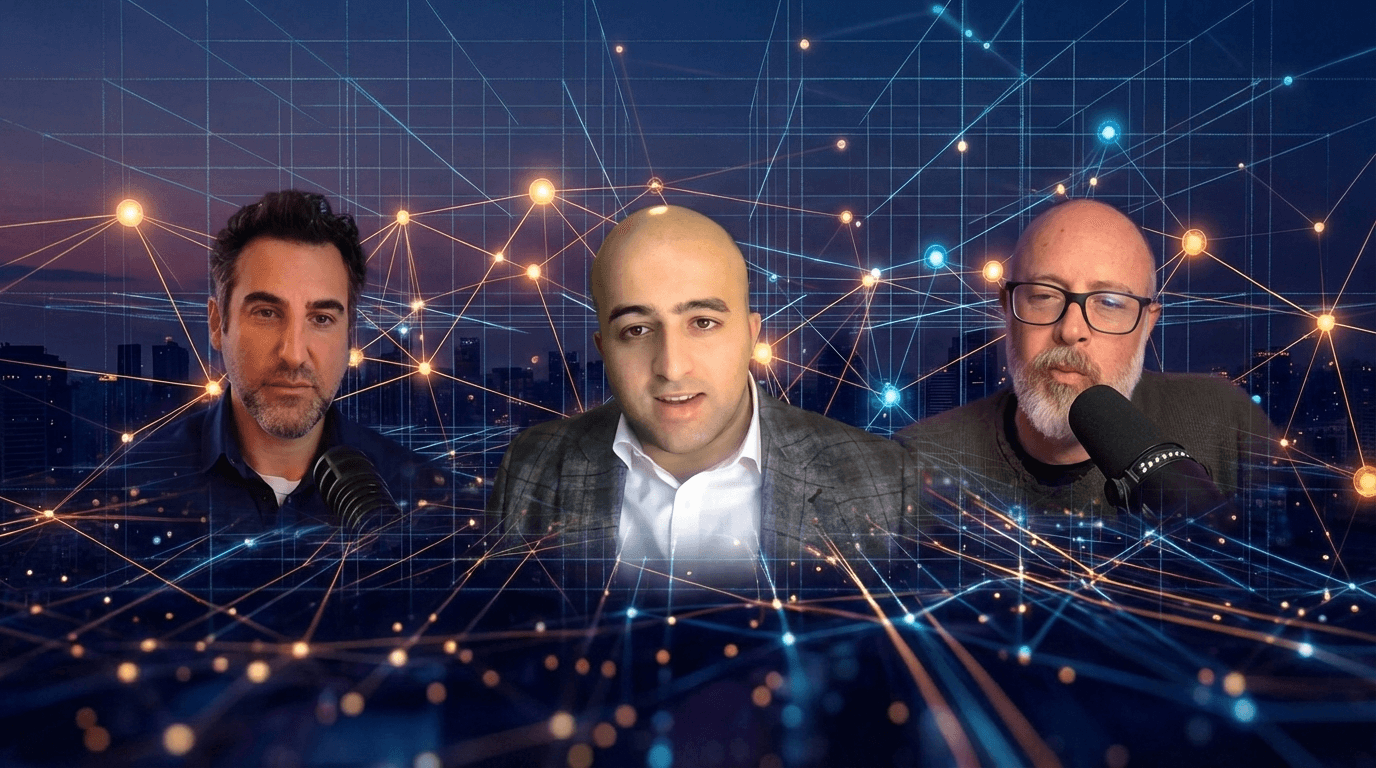
w/ Jonathan Harounoff, Israel's spokesperson to the UN
Share on Social Media
Play Episode
Listen on



Join us as we unpack the battle for Israel in the media, diplomacy, and the court of public opinion.

Make sure that whatever you're learning doesn't remain theoretical. That you actually have a human, a living, breathing person beside you that can actually attest to what you are learning. I think that's what can change minds.
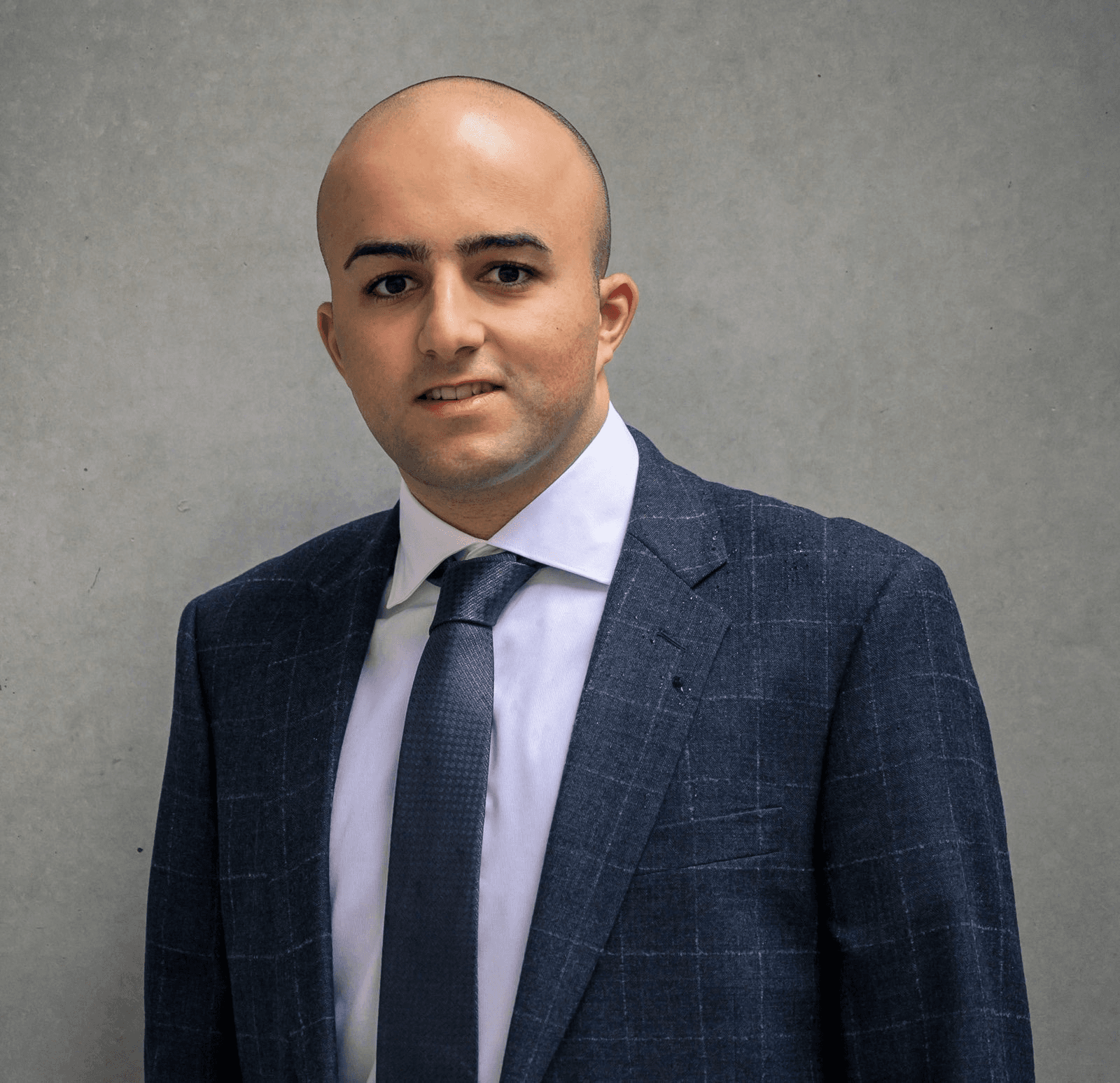
Jonathan Harounoff


About
Jonathan Harounoff
Mr. Harounoff is a sharp voice on geopolitics and Jewish identity, He brings insider perspective from the front lines of the information war shaping how the world sees Israel today.
Jonathan Harounoff
About
Jonathan Harounoff
Mr. Harounoff is a sharp voice on geopolitics and Jewish identity, He brings insider perspective from the front lines of the information war shaping how the world sees Israel today.
Lio [00:20] Welcome to TheJewFunction. I'm Lio. This is Seth. And we have a great guest for you today. Stick around. If you're new to TheJewFunction, please check out the first season — the first 22 episodes — to hear a little bit about our grand thesis. It's not really ours, but we took the time to commit it to tape: about why there's antisemitism, why it's been around for so long, why it persists despite all of our good intentions and good efforts, and what we think is the solution to antisemitism. We are, I think, the only podcast that actually offers a systemic solution to antisemitism. And TheJewFunction has been voted into the top 10 or 15 best podcasts on antisemitism recently. Maybe other people are thinking the same. I don't know. We'll see. At any rate, please leave your comments, likes, and if you value this conversation, consider following us and spreading this talk far and wide.
We are today with a great guest. His name is Jonathan Harounoff. He is an international journalist, a commentator who has been covering Israel and antisemitism for a long time now, writing in the New York Post, Haaretz, Newsweek, and has reported specifically about the rise of the new antisemitism, which we covered a lot in this podcast with many different guests. He is today Israel's international spokesperson to the UN. And we're very happy that he found some time this morning to spend it with us — his two new favorite Jews. He doesn't know yet, but he'll find out. Jonathan, Johnny. Is it Jonathan? Johnny? You know, I saw in the email it was Johnny.
Jonathan [02:14] Either is fine. Jonathan, Johnny. Thank you so much for having me.
Lio [02:20] We're very happy to meet new people. And that's actually one of the main reasons we've been doing this podcast — it lets us actually meet some terrific people who are working to protect the Israeli cause, the Jewish cause, to defend against antisemitism. People who go out of their way to really become activists. A lot of them were forced into activism, as they say, after October 7th. I don't know if you were always interested in antisemitism before October 7th — you'll tell us. But what we're seeing more and more is that there's this sort of general enlisting of Jews from all over the world for this common cause, with the exception of a small minority who has to object to that as well. And that's just part of the Jewish people's beautiful makeup. We'll talk about them also later, I hope.
But I wanted to hear from you first, maybe just so people get to know you a little bit, because you spend a lot of time writing about antisemitism, the rise of the new antisemitism at the UN, in global institutions. I think you called the UN a dark institution. I think maybe you used those words. So tell us — what does the world and antisemitism look like right now from your vantage point?
Jonathan [03:54] Well, thanks again for having me on this morning, this afternoon. I've always been interested in Iran as a country, as a people. I think there's a lot of lack of understanding and a lot of opportunity to learn about what really is happening inside Iran and how the people of Iran — the 93 million people there — are very, very different to the 47-year-old Islamic Republic of Iran. And I think as this current war progresses, those differences will become even greater. And people will realize that there is no war between Israel and Iran or the United States and Iran. It's between Israel and the Islamic Republic, who have been brutalizing Iranians for a very long time. And that's one topic that's been very close to my heart, not just as an interested journalist who wants to cover these kinds of stories, but also personally — my family comes from Israel, comes from Iran.
In addition to that, antisemitism has always been a very important topic to me. Not just the classic antisemitism, but how it's also evolved, taken on different incarnations — incarnations that are sometimes much more difficult to spot, that seem more trivial, able to pass muster in today's age, and that are classified as just legitimate criticism. And you see that very often when it comes to criticism of Israel.
In the past few years with the war in Gaza, there have been many, many characterizations of the state of Israel and its actions that have been blatant, unambiguous antisemitism — blood libels — when very senior UN officials are spreading false news, ideas that about 14,000 Gazan babies are about to die of famine and starvation within 48 hours. And then by the time it's debunked, it's already made every single headline across the world, every single front page newspaper. That's dangerous, and that does qualify as a form of antisemitism, even if it's not as overt as other forms.
And then you've also got not just the dangerous criticism of Israel that is openly antisemitic, but the violence that you've seen spread all over the world ever since October the 7th — and of course before — where the people taking these actions are unable to distinguish between legitimate criticism of politicians or the Israeli government and open antisemitism. So that's why, unfortunately, you've seen an increasing number of synagogues attacked, whether it's in Canada or Australia or the UK.
And you've seen this very disturbing and dark trend of Jewish holidays becoming sort of hunting grounds — days that people use to target and kill Jewish people. You saw it of course on October the 7th, which was Simchat Torah in Israel. You saw it in England on Yom Kippur, at Heaton Park Synagogue in Manchester, not far from where I live, where another lunatic used the cover of Yom Kippur — knowing that a lot of Jewish people would be congregating in one place and would be fairly defenseless and many of them won't have any phones on them — used the Jewish holiday of Yom Kippur to kill as many Jewish people as possible. And then of course on the other side of the world, in Australia, on Hanukkah, at a Chabad event, you saw another lunatic father-son duo take that opportunity on Bondi Beach to kill as many Jewish people as they could.
And you're seeing this conflation of violent actions and violent rhetoric directed at different Jewish communities that should no longer be tolerated at all, in any instance. Those actions are extremely violent, and I think are easy to condemn. Any sane person would condemn them immediately, and they usually do. And unfortunately, it doesn't happen until there is such a violent action.
But now, even lately, when it comes to Operation Roaring Lion, Operation Epic Fury in Iran, you're seeing additional dangerous antisemitic rhetoric being spread. We just spoke about Chabad — so you have right-wing commentators like Tucker Carlson spreading ridiculous theories that Chabad is behind, is the reason, the instigator of this war. They're the ones who've been pushing Israel and the United States to wage war on the Islamic Republic. And since he has such a large following, that ridiculous, dangerous antisemitic fallacy has gained some traction.
So we are living in a time where, unfortunately, violent antisemitic actions and words are being normalized. And it's incumbent on all of us who care about truth and humanity and one another to do whatever is necessary to prevent these dangerous ideas from gaining any traction.
Lio [10:07] So thanks for this overview. You know, we've been doing this for a few years already. Seth and I have been studying this topic for over — well, it's now close to 15 years together. And one thing you can see is that it never really went away. It's always been there. And in a way, you feel like people are waiting for a license to bring it out. There's going to be a point in time, a certain set of events that's going to trigger this awakening of something that exists in people — a lot of people, even people that you thought are — do you see this moment now as being different, or just a continuation of something that we just haven't resolved yet? Something deeper that we're just not reading correctly?
Jonathan [11:06] I think that one of the key turning points of what you mentioned was October the 7th. That almost gave license to many people to unleash a horrific torrent of antisemitic abuse — antisemitism that hadn't gone away, as you allude to, but had been perhaps suppressed. Which was why so early after October the 7th — within hours — before any action of any kind by Israel had been taken, you saw places all over the world, whether it was Harvard University's campus or the steps of Sydney Opera House, engage in horrific antisemitic action.
So I don't think it's gone away. I think it just sometimes goes into the background. But unfortunately, it's the oldest hatred and it's also the most evolved, most versatile hatred that we haven't quite been able to find a cure for. It's a virus, like coronavirus, and the only difference is there isn't a cure for it. The only cure to it is of course education, engagement, dialogue, and also fighting back.
But the challenge that I think we're facing — and you alluded to this, I think, before we went live, Seth — is that many of us are operating in different virtual realities. We're consuming different news, so we're consuming almost different facts that we think are facts. And it's very hard to reach common ground on an established set of facts and agree on what's right and wrong, what is and isn't antisemitism, when we're in completely different universes because of the algorithm — Twitter and Instagram and all that stuff. So I think it makes that problem even more challenging.
You may have — and I don't know which one's worse — you have some people who are consuming this antisemitic content and they actually believe it and then they're disseminating it because they think it's fact. And then you have people who clearly know that it's not true, yet they still want to disseminate all of this nonsense because they know that it can cause harm. And I don't know which of those categories is worse.
Lio [13:45] You know, before we open it up further, I'm curious about your personal stake in the matter. You said your family — were you born in Israel or in the UK?
Jonathan [14:03] I was born in London. Most of my family moved from Iran to Israel and to Italy, and they stayed there. Most of my family still lives in Israel. But my parents moved to the UK shortly after they met in Israel, and that's where I was born and raised.
Lio [14:26] Do you feel like a personal connection to this thing? Because you seem to have a very nice, almost cool, like a researcher looking at it, reporting on it. But is this something — where is it? What do you feel personally? Do you feel it in London right now? Do you feel it in New York, where you are right now? Bring us a little bit into the world of Jonathan, the person.
Jonathan [14:56] I don't want the cool and relaxed demeanor to suggest that this isn't something where I have a personal stake. It's something that I see all the time. Growing up, I don't think I experienced — I was fortunate not to have experienced a personal antisemitic attack, but I knew plenty of people in London who had. But at the United Nations where I work, and in the journalism that I've done, I see instances of antisemitism, of ignorance, of fundamental inability to engage with one another on a very regular basis. And it's extremely disturbing.
But my take is that if you don't stay composed and strong in your opinion and your stance while also keeping open the opportunity to engage, then you're not doing yourself any benefit. So that's why I usually have this cool and calm demeanor, but it's not because I'm not disturbed by what's going on. That's just the way I am.
Seth [15:59] So you're also raging inside simultaneously.
Jonathan [16:05] No, no. Whatever frustration I feel is used as fuel to try and do the work, instead of keeping it bottled up inside. It's not going to do any good if it's just inside, as opposed to channeling that energy elsewhere — whether it's to do the work that we're doing at the Israeli Mission to the UN when there is so much hostility and so much darkness coming out of the UN. When there are so many people saying, "Why is Israel part of the UN?" — no, we're channeling that energy to use our platform, use the seat that we have at the UN table to raise awareness of our own agenda.
By that, I mean: during October the 7th, we would invite families of hostages and released hostages to the UN to speak directly to the ambassadors and the UN officials and the world who had ignored them, who never came to their aid, to speak about their plight. That's the kind of energy that I'm talking about.
Or when the world wasn't watching what was happening inside Iran — using the platform and the expertise and the book that I've written, Iran Unveiled: Inside Iran's Women's Life Freedom Revolt, and the people inside Iran who I've spent years and years speaking to, and the Iranian people in the diaspora who I've been speaking to for years — to raise their voices, to elevate their stories, to humanize them, and to make it abundantly clear that the Islamic Republic is not the Iranian people.
The Islamic Republic is a 47-year-old blip in the grand scheme of Iran's history. And the Iranian people, who don't see a lot of Iranian-ness in the Islamic Republic, come from a history and culture that stretches back thousands and thousands of years. So instead of bottling up that frustration, I'm trying to channel it outwards — write about what's really going on inside Iran.
Back in December, when the protests in Iran started to unfold and nobody was covering it, I was covering it as much as I could. When the United Nations — it took them three weeks to issue any statement whatsoever about what was happening inside Iran when the protests were happening — that was completely shocking and surprising. And when it took them three weeks to convene an emergency Security Council session, we were busy doing other things at that time. We were raising awareness and doing everything we could to elevate the voices of the Iranian people, because they're an extraordinary people and they get ignored and overlooked all the time. They get clumped together with the Islamic Republic, and it's totally inappropriate.
These are people who've suffered more than anyone in the world at the hands of the Islamic Republic. And they're also — the vast majority of the 93 million people inside Iran want a relationship with the outside world, with the West, with Israel, with the United States. And of course, we did have that pre-1979, when Iran under the Shah — even though it wasn't a democracy — it was much better than what exists today. It had tremendous relations with the West, with the United States, with Israel. After all, it was the second Muslim-majority country in the world to recognize the state of Israel in 1950, after Turkey. And you had unofficial envoys and diplomatic missions established in each of the country's capitals.
Ben-Gurion saw Iran as a strategic ally from day one. Iran formed part of his Periphery Doctrine, alongside countries like Turkey and Ethiopia. And the idea was that Israel, this nascent modern state, was going to form alliances with non-Arab countries at a time when the Arab bloc was coalescing and was very anti-Israel, led by Egypt.
So all of this is to say that Iran and the Iranian people have this innate connection to the Jewish people and to the state of Israel that has been completely overshadowed and overlooked by the past 47 years. But that history and that cultural memory and connection still exist. And it's why, immediately after the killing of Mahsa Amini in September 2022 and the Woman, Life, Freedom movement that emerged after that, you saw Israelis and Jewish people taking part in all of those vigils and rallies. And it's why, also in the wake of October the 7th, at the hostage rallies and the vigils, you saw Iranian people in the diaspora always taking part. Why you saw that pre-'79 lion and sun flag at many of the rallies alongside the Israeli flag.
It's because of this amazing connection that these two peoples have. They're connected not just because they've both been victims of the Islamic Republic — whether on the Israeli side through direct missile attacks or through the proxies, and on the Iranian side by being brutalized for the past 47 years — not just because of the shared suffering, but also because they have this positive attachment, this positive history that I think many of them are just waiting to be unlocked.
And again, to the original question: instead of bottling all of that in, which I don't think does any good for you personally or for the world, using whatever talents and expertise and knowledge you have to try and change the world for the better. And that's what I'm trying to do when it comes to Iran and when it comes to Israel and the UN.
Lio [22:17] So I can see and feel that Iran is close to your heart. And we didn't mention the book — well, you have mentioned it. It's the one behind you. And I think that connection to Israel — I don't know how it is in New York, but in Israel for sure everybody talks about it. It's a known thing. Everybody talks about repaying the debt to King Cyrus, right? Koresh. You know, mentioning that relationship that existed.
And I think, again, when there isn't open hostility, Jews are very good at creating these alliances and forming these bonds with different groups. And Jews are very good at advocacy and diplomacy and commentary. We're very good at those things, for sure. And yet you can see that the problem of Jew-hatred keeps adapting to whatever alliance we come up with, whatever strategy we come up with. It just kind of shapeshifts to meet the mindset of the new generation.
Why do you think that is? I don't see any other kind of hatred or animosity to any other group happening throughout history. You can see it here and there, but the Jews are definitely the exception. So how do you explain that? Did you even ask yourself those questions? Not so much what's happening, but why is it happening? The meta questions about antisemitism.
Jonathan [24:05] Yeah. I'm sure many of us have grappled with that, just scratching our heads, not knowing the answer. I think, again, a lot of it has to do with education — or just many people in the world never having met a Jewish person before. And their only frame of reference for a Jewish person is what they've read online in their own echo chambers, or what they see in the news. Their first-ever frame of reference is, for example, these Jewish people, these Israelis fighting this war.
But then, when you — and I've had many encounters, especially in my university days, where I was one of the first Jewish people they'd ever met — sometimes there's a sort of shock when they meet a Jewish person and that Jewish person is not exactly what they thought a Jewish person would look like. That Jewish person isn't a white person from Eastern Europe, but is actually a brown person with family from the Middle East.
And I even had one conversation with someone — it was hard to tell if it was a joke or not, but I think it probably wasn't — they were trying to frame it as a joke in case they were wrong. They were convinced that Jewish people actually genuinely have horns. And this came shortly before an article my wife and I wrote about how at Yale University they still have in their college center a stone that shows Moses — a horned Moses.
Lio [25:52] Oh, Michelangelo's version. Exactly.
Jonathan [25:55] They still have that, and they just assumed that's an accurate depiction of what a Jewish person might look like.
But I don't have a reasonable answer for why antisemitism is the only and the most enduring kind of hatred, and how it's shapeshifted while other hatreds sort of dissipate over time or become new. I do think that one of the ways to address it is education and outreach — and rather than just focus on the victimhood narrative, which I don't think serves anyone well, even if it's important to remember the suffering — actually projecting images of strength and creating new alliances. Expanding things like the Abraham Accords, the Cyrus Accords one day hopefully — those are the things that I think can actually change minds and hearts.
But I don't have a reasonable answer as to why this age-old hatred exists. I don't think it is going to go anywhere; it's just going to evolve. But I think the way that we best combat it is by continuing to form alliances with people who perhaps an alliance was once unthinkable — whether it's in the Gulf states or beyond. And that's, I think, the best way that we continue moving forward.
Seth [27:24] After the destruction of the Temple and the Jews were exiled — before Cyrus let them come back — there are probably today many of the Persians who are Jews who probably don't even know that they're Jews. The same way that the Spanish and the Portuguese during the Inquisition became Marranos, or conversos as they're called. So if we could somehow look at their soul DNA, it'd be very interesting to see how many of the Persians today are actually Jews.
Leo and I have this unique perspective on all of these topics. We really zoom out big, to the almost — Lio, can I say spiritual? — spiritual level of it. Or gigantic macro level.
Lio [28:31] Well, it depends. Let's ask Jonathan. Are you a man of science? Are you a man of the book? Which speaks to you better?
Jonathan [28:37] We can talk every language. We've learned to adapt. Well, I want to hear more about your theories and then I'll tell you.
Lio [28:43] Okay. So take one, Seth. I'll take the other.
Seth [28:51] Okay, so listen. Quantum science today tells us that something can happen in one place and simultaneously, very far away, you can have a reaction. That's quantum science. At the same time, we have just plain old Newtonian physics, where the world is a pool table. If you step in front of a truck — it's true that, for example, this phone is mostly empty space and my hand is mostly empty space, but they don't — if you zoomed in enough, everything is mostly empty space. But we perceive the world as solid. So these two different perceptual realities are happening at once.
Our worldview is that this world is a copy of a spiritual template. And all of the books, our books — probably many people who were paying attention saw how what's happening in Iran now parallels the whole Purim story. A lot of coincidences happening here. It's almost like the same template, but the characters change and the background scenery changes, yet the same kind of inner process keeps happening.
And the role of the Jewish people in this whole big picture is to bring shalom — wholeness — together. The brown ones and the more whitish ones, the Eastern ones and the Western ones, the liberal ones and the conservative ones. The Jews have this role to become whole. And all of these other pressures force us to do that. And the good future for us will come in our uniting together.
So of course we have to stop people who want to kill us. We also have this Newtonian physics law that says if someone comes to kill you, you have to kill him first — very practical, down-to-earth stuff. Simultaneous. So we have to deal with that. We have to deal with the UN, we have to deal with the press, and all of the down-to-earth real things. And then we also have to look at the really big picture.
It's like: you may go to work every day, but that's not the goal. The goal is to come home at the end of the day and hug your child. You go out to work in order to carry on this whole thing. So what is the whole thing that we're carrying on? We have to make time to bring the Jewish people into this wholeness, simultaneously with all the other groundwork. And somehow, in that work, there will be a reflection in reality. That's the premise — that when the Jewish people come to more wholeness, the world itself will also come into more wholeness.
Lio [32:12] Let me turn everything that's been said into a question for you, because you said a lot of different things. Growing up and doing what you're doing and looking at the Jewish people and the rest of the world — have you ever felt that there's something a little different about this group of people? Let's start with that. We don't have to be politically correct about it. Really just a personal question of feeling. Do you feel that there's something a little different with this group of people? Something. I'm not even saying what it is. I'm not saying better, worse, sideways. Just — first of all — different. I want to build the premise step by step.
Jonathan [32:55] The honest answer is — of course. Growing up, you always feel like you're part of something special. A special tribe, a special community, a special story unfolding that goes back thousands of years, that has a thread going back thousands of years.
But the reality is, I've only ever been Jewish, from this community. I've never grown up in a different community where maybe I felt differently. This is the only vantage point I've ever had — from London, from Israel, from the UK. So if I was in another part of the world, having never met a Jewish person before, in another tribe somewhere, maybe I would have felt differently. That's an extreme, and it probably might be a very special community. But from my personal vantage point, of course, it's an honor, it's a privilege.
And just to touch — before I forget — on the unity thing that Seth mentioned. I love that concept. And the thing that I sometimes struggle with, and it's hard to see, is that the unity you talk about seems to only ever happen — and maybe it's just a human condition, not just Jewish-related — only after intense trauma and intense tragedy.
Seth [34:08] My friend, this is it — let me cut you off. You just erupted. Maybe I've answered —
Jonathan [34:13] Maybe I've answered your theory already. But it does seem like there's a lot of — before any kind of tragedy, when you're in a period of relative comfort, safety, or full safety, that can also lead to a form of complacency. If you take Israel, for example, there was quite a bit of infighting before October the 7th, and that may have been a distraction from actual existential threats. And then October 7th happens and everyone is unified. And I loved that unity that we saw, but I wish that we weren't just unified after periods of intense pain and hurt.
Lio [34:55] Beautiful. So that's exactly the point that we're trying to get you to look at. Because the only thing that we're trying to do here is to change the way we view cause and effect in this system. We live in a closed system, forces operating, as Seth was sort of alluding to. And we have a tendency as humans to look for — whenever something happens, it's like, what happened before? What caused it? We start an investigative committee, we try to find out what was the cause. And then if you find a problem, who do we need to fire? Who do we need to sue? What do we need to change so it doesn't happen again? That's kind of usually how we work.
But because we're talking about a bigger chessboard, as it were, it's hard sometimes to see the cause and effect. Luckily for us Jews, we have a 3,000-year-old recorded history, and we're very well-documented in the media. So we have the advantage of being able to look at ourselves maybe more than any other group of people. One group of people have a little bit of mythology, something written, folk tales, songs. We have everything from every angle and every place of the world.
And so when you look at it — and that's what we did, we spent time looking at these historic patterns — what you just described was not merely a phenomenon that people unite after some external pressure comes. We saw an even more disturbing trend: when Jews move away from the ideal of unity — because we are a people of an ideal, right? We're united around an ideal. We're not the same biologically. We don't share all the same DNA. We have people joining the Jewish tribe. But what unites us is an ideal.
And that ideal of unity — when we move away from it, as you said, in times of peace, we become complacent. We move away. We try to become like others around us. And we forget that our main directive is to be the unifying factor in humanity.
When we forget that, that's the cause — and the consequence, the reaction of the system, is to apply pressure on us to once again remember: no, no, no. You need to be an example. You need to show humanity that. That is it. Everything else you're doing is great. And there's a reason we are capable of doing so many great things. We can talk about it. But the main directive is always that. And when we stray from the directive, then the system pressures us. And we call that pressure antisemitism. And it could be more violent, less violent, more overt, less overt. More direct, more indirect. It doesn't matter. Eventually, it pushes us.
So what we're trying to do is ask people — even people like yourself — how can we get the Jewish people to really look at that issue and try to own it? Own that role in the system of humanity?
Jonathan [38:21] That's a big question.
Lio [38:23] You're here for the big questions, my friend.
Jonathan [38:27] And it's an interesting theory. I don't know if I've heard it before. So I will now — and later on — noodle on it for sure. But I think it's... Whether antisemitism is, as you say, the tool that is used to eventually bring people together, or if it's something else, I think that unity point is extremely, extremely important — the idea of community being one. But I actually don't have an answer for you. Remind me what the last — because you said a lot, you both said a lot of very interesting things. I want to specifically answer the last question.
Lio [39:19] So the last question was really — if we agree, and I totally understand that you would need more material. And that's why we invite people, by the way, to watch the first 22 episodes where we really break it down. We follow Jewish chronology. We use quotes from the sources, historic references, everything. We really open it up.
But assuming — I'm saying we're playing a thought experiment, right? Assuming that this is the case and antisemitism is not something that we have to defend against, but rather it's a reaction to how we carry ourselves as Jews. The system needs a group of people to show that you can come together, you can unite, you can form structures of order above the differences, with the friction. Something that exists on basic levels in nature — in electricity, in biology.
Seth [40:15] Like a rainforest or anywhere in nature — you have all these different things doing opposite things, but it's a whole system.
Lio [40:22] It's always two opposites. Even male and female to make a baby. It's always two opposites. But on the human level, socially, emotionally, we're not able to do it. We come to blows. Jews are that group in nature that needs to pave the way, lead the way, show the world that it is possible. And by the way, we're doing this in small doses. When we gather around the Shabbat table and everybody kind of puts aside their differences —
Seth [40:49] October 7th — every time something like this happens, the majority of all the different opinions say, "We are united." Even Lapid and Bennett: "We're all united behind this action now. We're putting politics aside for now."
Jonathan [41:04] Yeah.
Lio [41:04] So how can you do it? The question is: if this is the thought experiment, if we are indeed this group that needs to do it — someone has to do it, someone has to lead the way. You need to start puberty; you need a group of hormones throughout the body to kickstart the process. Let's say that Jews are the hormones of humanity. We're going through puberty and we need to mature. We need to be able to function above these differences and bring the opposing pieces together. Somehow be able to hold together and rise above it. Let's say we are that group of people. How can we make Jews unite without the threat of war and massacre? Why do we always come to it? You look at history — it's always that. We bring it on ourselves. First Temple, Second Temple. It's always Jews leaving the ideal of unity and then —
Jonathan [42:02] So how do we do it before the blows? It's a question that I mentioned before as well, and it's something that I wish I had a good answer to.
But I'm just going back to the original framing of this theory. I understand — I don't usually have these theoretical kinds of conversations, just because in a region like the Middle East, when it comes to Israel and Iran, you sometimes don't have the luxury to engage in these kinds of things. So I appreciate that.
But I agree that any antisemitic incident that unfolds in the world is a very solemn and tangible reminder to the Jewish people that they have to remain together. I just don't necessarily — and correct me if I'm mischaracterizing your framing — I just don't know if... It sometimes seems like it's almost justifying what is happening if you're saying that the reason why this antisemitic act is happening is in order to bring Jewish people together.
I would never want to excuse or justify an act of fundamental evil that doesn't actually have an explanation and that is absolutely not the fault of the Jewish people. So, for example, the Bondi Beach massacre — I don't see that as just a reminder, a nudge to the Jewish people that they have to come together. Of course that is a consequence, but it was also fundamentally, inherently abhorrent and evil, and it should never have happened to anyone.
Lio [43:44] Listen, Jonathan, we all feel intuitively what is good and bad. We feel — when you run to hug someone, intuitively it feels good. And when you run to shoot at someone for no apparent reason, intuitively it feels like evil. What was happening there — shooting at Holocaust survivors, at children, what happened on October 7th. In fact, take every Jewish calamity throughout history: it was always terrible. There's no question that one side had to be very evil in this equation and one side had to be a victim, suffering from this equation. There's no question.
I think what it requires is us making an effort to rise above just these actions. And this is what we're trying to do here. We're trying to step away from the emotions a little bit, because they are very emotional. When I get hurt, I don't care about anything — I just got hurt.
When I'm a baby — we have friends from New York, they got stuck here in Israel because of the war, and they have a three-year-old child. He runs around and he pulls on the dog's tail. And the dog gives him a little warning bite. And he starts to cry: "Bad dog." He goes — "the dog is bad." So of course, on that level, it's very easy to see good and bad.
What we're trying to go to is the level of the forces, the laws that operate in the system. That, I think, is what is missing. We're so good at looking at the laws that are before us — like gravity. I drop this, it falls. But there are other laws. There are so many laws that are hidden from view. Electromagnetics, the fact that we can have this conversation over — you bring a person from 200 years ago in here, it looks like magic, right? So it stands to reason that there are laws governing human interaction.
Seth [45:54] Both quantum physics and Newtonian physics both exist at the same time. And we have to see that. There's more things going on. And God forbid we're going to tell a Jew, a victim of Bondi Beach, that he didn't unite and therefore something happened to him. No. That's like a child who's born to a crack-addicted parent. What is he going to do? He's the consequence of many, many things that happened before him, for many, many years. So those people on Bondi Beach were the result — because the soul is something eternal.
Even a tree — you have a tree, it drops an apple. The next apple has something to do with the previous tree that dropped it, whether there was drought, whether there was good sun. Each subsequent apple has to do with the previous apples. That's why all of the foods now — or even dogs. We want a passive dog who's also this, so we mate them, and then you get the next one. And then we want this and this, and then we mate. So the result now is a consequence of many, many causes and effects.
Jonathan [47:19] It sounds like then, based on what you're both saying, the only real solution to all of this is to actually be students of history and take notice. Learn what happened before your time. Learn what happened to your people. Learn how they suffered. Learn what they did right, what they did wrong, what they overlooked, what they neglected, who they neglected. And that is the only way to prevent the same thing from happening again.
Lio [47:47] Well, first of all, we're proposing something because what we're doing is not working. And Seth and I refuse to just accept that this is the war of our life, that's it, we're going to be in permanent war, constant war forever. No. Nature always has a beginning and an end. Everything has a consequence. You plant an orange, you get an orange in the end. Yeah, there's upheavals along the way — it's going to be sour and bitter and all that stuff. But in the end, there's going to be a fruit at the end of that action.
So we're looking at ourselves as part of this system. Yes, it's more complex. Yes, it's complicated. But luckily, Jewish sages — that we are, you know — humanity and even us ourselves, we're so keen on taking so many great things from them, right? Laws and morals and ethics and all kinds of great ideas about community and society. And somehow, this part where they talk about the role of the people of Israel — that part is like, "No, no, no, that's where they go crazy. What are you talking about?" If you agree to all this wisdom that came from Jewish people, Jewish sages, you can't just pick and choose what is comfortable to you. I mean, not to you personally — to us. We have to take everything. These were very smart people. They were not dealing with fairy tales and mysticism and red strings and holy water. That was not the thing.
When you start to look at those books, as Seth said, as manuals for internal change or for social change, suddenly they take on a totally different light. We are a group of egoists and we're trying to become better.
You know, the word Adam in Hebrew — that's "man," right? Adam. Do you know where that word comes from?
Jonathan [49:39] Go on, I don't want to get it wrong.
Lio [49:45] It's okay. All the definitions are right. But there's another definition which we don't talk about: the word Adam comes from the word adameh — "similar to." We're called Adam because we can rise to resemble a higher degree of existence. A higher degree. Like the Creator — the force of love and bestowal. As it says, "The Creator created man in His image." Similar to. Resembling. But we're not — we're the opposite. We're the exact opposite. Look at the world we live in. It's a terrible world.
But yes, yet there is a way to rise from it, to want to correct that. And unless — what we're saying is that unless we correct that, unless we work on that — and all the sages point to the same place: "Love your friend as yourself." That's the greatest rule in the Torah. This is the point. Unite. Be together. Care for each other above everything, at all costs. Start with that.
If we don't do that, then everything else is a consequence of that. So yeah, those consequences are terrible. And I'm not taking away from the responsibility, the agency of everybody involved in every event in the world.
Seth [50:54] The Newtonian physics aspect of it.
Lio [50:56] Exactly. But on the quantum level, or spiritual level, whatever you want to call it — and again, it's not mysticism. There are actual laws. There are things written about it. Also, modern network science talks about that relationship. It is very, very real. We influence each other in ways that we cannot imagine.
So maybe if we have people who come to Israel and say, "Hey, you guys need to do this — start doing it." And if we instinctively do it after a tragedy, why not work on doing it before? Maybe you can do that. You're at the UN. You're there. You're surrounded by people who are influencers, shaping the narrative. How can we get that idea to the top of everything?
Jonathan [51:40] It's an extremely critical task, but it's also extremely difficult. It's very hard to convince people to do something before they're forced to do it. And when it's competing with so many other urgent, pressing priorities — everything is pressing, everything is urgent for some person.
So I agree. I don't have an answer as to how, but I agree that it's something that we should collectively be thinking about. How do we make sure that we take all of these steps and actually do things before we're pushed to do it? How do we save the heartache, the suffering?
But unfortunately, it's like the example you gave with the child and the dog. The child will continue playing with the dog or irritating the dog until it gets a warning. And in this case, I'm not comparing the Jewish people to children, but it's a similar example.
I've read many articles about the golden age of Judaism in America as well — American Jewry — how there's a good side and a bad side of being extremely comfortable, extremely entrenched in society. Of course you're not suffering or anything, but then there's also that complacency creeping in. So how do you remain in a state of constant security and safety while also not being complacent? While also assiduously acting, working towards preventing any kind of future tragedy? How do you maintain that unity while also maintaining that safety and security?
It's a really big question, and I'm not going to try and suggest answers that are half-baked, because I think this is such a big topic that it deserves much, much more time and much more thought. But I completely agree that it's something that we should all be focused on.
Lio [53:56] You mentioned earlier — Seth, are you with us? Look — frozen. Did we lose Seth? Wow. Looks like he froze in a very pensive mood. Hold on, let me just ask. Oh, it dropped.
Maybe he'll come back. You mentioned education, Jonathan. And believe you know — oh, there you are, Seth. You froze. We were waiting with bated breath for you to jump in. I was just starting to ask Jonathan about education, because — and again, once again the Jewish story here serves as a nice illustration. There are always signs, right?
Free will is a big thing. I'm kind of opening up another big topic, but I think it's important because we live in a world where we exist as free agents. At least we have the illusion of freedom, and it's an important illusion. Otherwise, there would be no need to evolve us from the level of monkeys, let's say. Monkeys have everything. Why take them another step forward, to give them the ability to think and reason, look at the past, look at the future, make seemingly free choices? There's something there. If you look at evolution as a whole, something is there.
But there are little signs all around us all the time, kind of like how Seth was talking about Purim and the symbolism of Iran. So you can say, "Oh, well, coincidence." But how these terror attacks started to cluster on top of Jewish holidays — it's all coincidence? Or it's convenient from a terror standpoint? Or it could all play a role in pointing us in that direction, right?
Because all of the Jewish holidays, they all talk about this idea of unity. What happened in Purim? There's a people dispersed among the nations, and they're dispersed — they lost connection with their God, which is the force of love and bestowal, the unity around that. And that's why Haman said, "I can destroy them." And then Esther comes and says, "Go assemble the people, unite them." Right there in that story of Purim, we have the idea of unity. And it's like that in every holiday. It always comes back to our relationship with the other.
And I think education is a big thing, because Jews are notoriously famous for their approach to education, right? Their rigorous education — extreme in some cases among the religious orthodoxy, but also very much valued with other communities.
So how would you — if you had a vision, let's say tomorrow you become the next ambassador to the UN or you climb to this level where you can affect policy — how would you see education playing a role? Can you maybe paint a picture of a future where people are educated? And I'm not just talking about children. I'm sure you're not talking about children as well.
Jonathan [57:05] No. I think there are existing elements that are good, of course. But one thing that I would change is I would try and make different aspects of education — especially when you're learning about very serious topics that may feel detached — use those opportunities to actually interact with the people that you're learning about. So: learning with them in the room, not just talking about them.
So, for example, if you're learning about what happened in the Holocaust, make sure you're actually meeting a Holocaust survivor. If you're learning about October the 7th, learning about Israel's history, Iran's history, learning about the Middle East — make sure that whatever you're learning doesn't remain theoretical. That you actually have a human, a living, breathing person beside you that can actually attest to what you are learning.
And I think that goes back to what we were discussing before, about one of the reasons why antisemitism is so rampant. I think it's because there are these conspiracies that there are billions and billions of Jews around, and the reality is we're just a tiny fraction. But when you actually see, interact with the person that you are learning about, I think that humanizes them and makes it much harder to reject their history, their existence, to demonize them — when you actually have a face, a human, a story to whatever you're learning.
So if I was in charge of education on a certain topic, I would make sure that you have as many interactive opportunities as possible to reduce the amount of ignorance and the amount of delegitimization and demonization that may emerge down the line. If someone who isn't Jewish is learning in abstract ways about the Holocaust without ever having spoken to a Holocaust survivor, I think your chances of doubt creeping in are much, much higher than if you were learning about the Holocaust, had no Jewish connection at all, and in one of those classes you had someone who's now an 85-year-old great-great-grandmother who survived the camps at a very young age and speaks directly about it. I think that's what can change minds.
Lio [59:57] I like it. Can we also apply it to education among Jews? Can I bring a right-wing Jew and make sure he sits there with a very left-wing one, and a religious and a secular? Create that mix?
Jonathan [01:00:11] It's a very idealistic model. And unfortunately, there's so much polarization. Even though we're more connected than ever before, I think we're also more divided than ever before. People just don't have — you've seen an explosion of all of these podcasts where people are pitted against one another and it's framed as a debate, but they're very rarely debates.
I wish you had more opportunities where people who have completely different perspectives — even within the Jewish community — actually have a conversation where they both agree from the beginning that their objective entering this conversation is not to just impose their view on the other person, but to actually potentially learn something from the other person. And that may potentially lead them to thinking differently about anything to do with their perception of this entire issue.
So I wish you could also have people on the left and the right, religious and not religious, come together and use those opportunities. Because there's so much I think that they need to learn about each other. There's a lot of ignorance within the Jewish world as well, about secular and Orthodox and so on. For sure.
Lio [01:01:33] And interestingly, people are overcoming that in the army, for example, where people are enlisting en masse. If you compare the level of unity among people who are 60 and up in Israel and the level of unity among people who are in service age — worlds apart. So I hope we're moving in that direction. I think the generation is ready for it.
Jonathan, I have a quote in the chat. Before we ask our guests to read a quote, I found one that is very much apropos what we just started to touch. I feel like we're just opening it up. Now I regret telling you at the beginning of the show that we don't do three-hour shows, because it sounds like someone we could go on for a couple more hours with to open things up.
But if nothing else, I hope that — oh look, it's good timing. A siren just started here in Israel. So why don't you do this — read the quote for us, and we'll...
Jonathan [01:02:32] Okay. Likutei Halachot: "Love your neighbor as yourself is the great rule of the Torah, to include in unity and peace, which is the essence of vitality, persistence, and correction of the whole of creation — by people of differing opinions merging together with love, unity, and peace." Amen.
Lio [01:02:54] See, that's how the sages said it. We didn't say it — it's our sages.
So I hope — first of all, thank you for coming here. Again, I feel like the time just flew by and we barely got to scratch the surface on Iran. And we would love to talk to you more about Iran. It's another opportunity, maybe after some of these things wind down.
But we hope that we got you thinking, we got our listeners thinking about these ideas. And we encourage you and everyone else to listen to the first season, the first 22 episodes of TheJewFunction, and share it far and wide. Because that's how we hope it's going to be the beginning of a wider, broader education. Because I feel like we need it. I feel like people are doing such amazing work to fight antisemitism, but maybe we need to go into the root causes, the forces behind the forces. And we have a lot to learn there.
So Jonathan, thank you so much for being with us, Seth. And stay safe. I know — I just got the whole family in the bunker here, so we're good. And we'll see you next week, I hope, for another episode of TheJewFunction.
Jonathan [01:04:11] Thank you so much for having me. It was great to be with you both. Thanks.