**Lio**
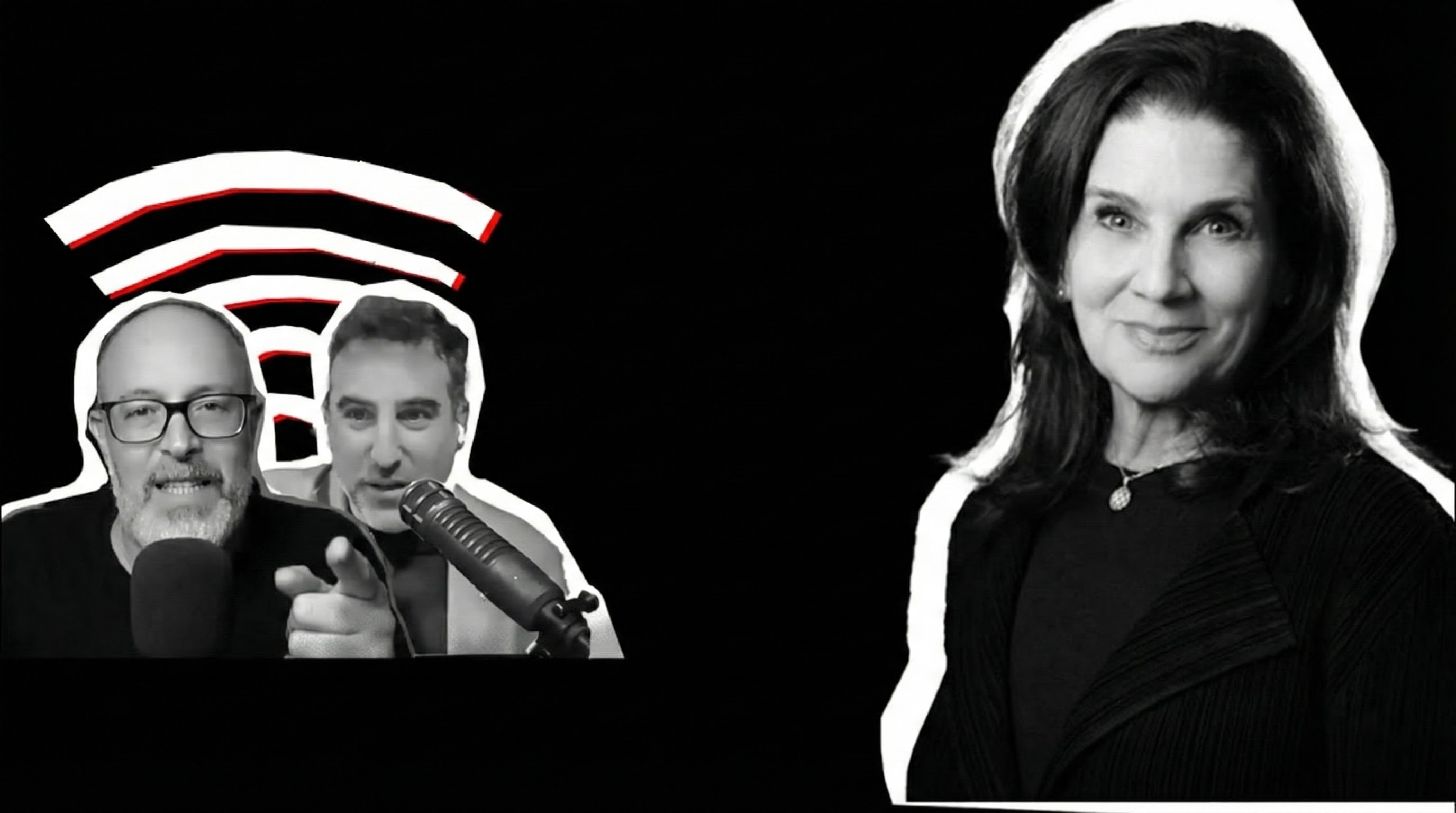
And we are live. Welcome everyone to TheJewFunction. I’m very happy to be here. So, I’m Lio, this is Seth, and we have a great guest today. You can already see her, but I want to give her a proper introduction. We used to let the guests languish in some waiting room while we gave them a proper intro, but now you’re already here, so you can hear us introducing you.
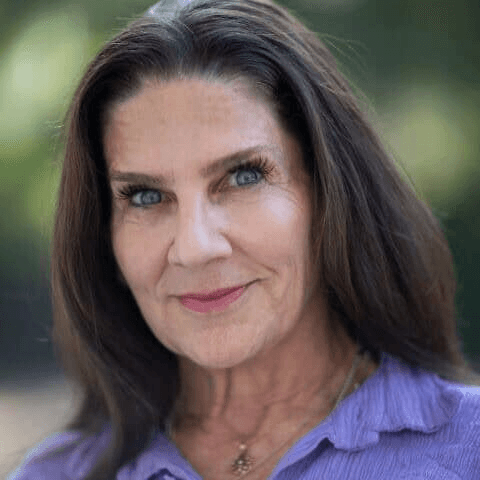
I’m very happy to have Liz, the host of the *Capital Coffee Connection* podcast. She’ll tell us about that interesting podcast where she hosts political figures to talk not about politics, but about the things that connect us and shape our identity. But she’s also here because of a recent book that just came out called *Saving Abigail*, about the harrowing true story of her great-niece, Abigail, who was abducted into Gaza, lost her parents who were murdered, and then was released after 51 days in the first deal.
Liz wrote a book about that experience, but she’s also using that book to open up the whole idea of using your voice to make a change. And also: what does it mean to be a Jew? This is really very interesting to us because that’s exactly what we’re trying to do here. So first of all, we’re happy to have you here, Liz. Welcome to our show.
**Liz**
Thank you for having me.
**Lio**
Yes, welcome. We're happy to have you because we deal with the theory behind why there’s antisemitism.
**Seth**
It’s called science, not theory, at this point.
**Lio**
Hold on, I wanted to say it’s confirmed! So we had a theory, and you could say that we’re testing it. Every day we wake up in the morning and we’re testing it out on ourselves. And we decided that it’s a good idea to ask other people what they think about these ideas. The nice thing is that it puts us in touch with some really interesting people who are coming at this issue from all kinds of different perspectives. Some of them are not even Jews. Some of them are even—you may call them anti-Semites—but in some very interesting way, they all sort of gravitate toward the same ideas.
Along the way, it helps us leave the theory and really dive into the person sitting with us, hear their unique experience, their perspective, and get into their heart a little bit. That’s what we want to do today with Liz. Liz, I was wondering where to start. I think we need to start with the book and with the story, because it’s really curious. Maybe tell us a little bit about your connection to Abigail, to the events of October 7th, and what compelled you to write the book.
**Liz**
Okay, well, thank you. I’ll start, and please join in because it’s a conversation.
I lived in Israel for many years during the 90s; I came here with my husband at the time. We raised children and we were building a shopping center in Beersheva. One of the things that we would do—we lived in the Tel Aviv area—is we would go down there and stop at a kibbutz called Kfar Aza. At that kibbutz, which is along the border with Gaza, was my sister-in-law Shlomit and her husband Eitan, and they were raising four children. They had lived there for many, many years. They were one of the first families to move there in this kibbutz's founding.
So, this neighborhood was some place that I was very familiar with. I knew how to drive in there, I knew how to walk to their house, to the dining room. My kids loved it because it was this beautiful place where the kids could run free.
I lived back and forth between the US and Israel. I happened to have been in Israel on October 7th. I had taken a flight out of New York/New Jersey on October 5th, and I was going to visit my daughter, Noa, who lived in Jaffa. I was on the plane and I see Senator Cory Booker, who I know—he is a New Jersey senator. I think he might be your senator, Seth. And he said, "What are you doing tonight? It’s Simchat Torah." I said, "I’m just going to my hotel, I’m going to see my daughter in the morning." And he said, "Come with us. We’re going to go dance with the Torah, and then we’re going to have this dinner and it’s going to be a beautiful evening."
Truthfully, I am a Jewish woman, but I had never danced with the Torah, and I had never been to an Orthodox shul in Israel in all the years I lived there. So I said, "You know what? Okay." We got to Israel, and we go to Jerusalem and it is beautiful. It’s this magical evening of Erev Simchat Torah. We go to the shul and I’m dancing with the Torah. On the other side of the room is Senator Booker dancing with the Torah. We go to dinner with his family afterwards, which is a Jewish-Israeli-American family—30 or 40 young people, old people, everyone.
Then I go back to Tel Aviv. Senator Booker and his team stay on in Jerusalem; they were on their way to do more Abraham Accord work in Israel, the Palestinian territories, and the Gulf region. I go to bed. Then, at 6:30 in the morning, the alarm at my hotel goes off. This loudspeaker blares in my room and says, "Run to the safe room. Do not do anything but go there."
I go there, and it’s a stairwell at the hotel. As you guys know, in Israel, people have gotten used to running to a safe room, spending 10 or 15 minutes there, and then starting their day—which is horrible. We should never have to do that. But on this morning, it didn't just happen once. It just kept happening because missiles were coming in from Gaza.
After a few times, I started to hear something was happening along the border with Gaza. I called my sister-in-law, Shlomit, who lives along the border, and she didn't answer. I called my niece, Liron, and she didn't answer. Then I called my sister-in-law in Tel Aviv and I said, "Nirit, what's going on?" And the first thing she said was that my niece Smadar, her husband Roee, and their baby girl Abigail—three years old—had been murdered that morning by Hamas terrorists.
Even as I tell you this story over a year later, it still gives me the chills because it is still so alive in me. At that moment, it changed everything.
We learned this from a six and a nine-year-old. These children had watched their mother be murdered in their house and then had run outside with their three-year-old sister. Their father, who was a photojournalist who had always gone out when there were missiles to take photos, realized this morning that it wasn't just missiles—there were terrorists. He even took pictures before he was gunned down; he captured paragliding terrorists coming in from Gaza. When he saw that, he ran home, picked up Abigail and the children, and as they were running, he was gunned down. He fell onto Abigail. The six and nine-year-old saw their father murdered and believed their little sister was too. So they locked themselves in a closet where they spent 14 hours that day. They were the voice that we knew about what had happened.
So, at that moment, we thought that Abigail had also been murdered. It took a few days to find out that she had actually survived. She had crawled out from under her father’s body. This beautiful green neighborhood, like Gan Eden—Paradise—was overtaken by hundreds of Hamas terrorists. This little three-year-old survives, she’s running around and she finds a place to hide. But then they were taken as hostages. We only learned that a few days later when they cleared the kibbutz and Abigail's body was nowhere to be found. It was at that moment that she became a hostage, and that started my work to help get Abigail free.
**Lio**
I was also here in Israel. Even though I spent half of my life in New York, I came back a few years ago. We knew it was an unusual thing. But when you got the news that she's a hostage, I’m curious: What compelled you to go advocate? What did you think you were going to accomplish?
**Liz**
It’s a really good question. I’ll be honest, I came back to America because people started telling me, "Go back to America, you’ll be more helpful there." I got back to America and started telling the story and doing press. But in the first few days, I kept thinking they were going to return these children. They took 35 children under the age of 18, not to mention grandparents and people that were handicapped. You thought they were going to return them because nobody takes a three-year-old child as a hostage.
**Lio**
Because we’d like to believe that we share the same values somehow.
**Liz**
Exactly.
**Seth**
Who is the person who would take three-year-olds hostage? And what's guiding them?
**Liz**
Hate. A lot of hate.
**Seth**
We all have hate inside of us.
**Liz**
Yeah. Look, I can't get into the mind of somebody that is maniacal and feels the entitlement to do that.
But to go back to how it started: I get a call from a woman named Sophia. She said, "I'm going to Washington D.C. We’re going to help lobby the US government... I'm going to be coming with Keith Siegel’s sister." Keith Siegel was taken from the same kibbutz as Abigail. I said, "Okay, when?" She said, "Tomorrow."
I was in New York. I took a picture of Abigail—I had asked my family in Israel to send me her photo—and I made as many photocopies of this as I could to give to people on Capitol Hill and the press. I wanted them to see what a three-year-old hostage looks like. When I would tell people, their faces would fall. Even they didn't understand how any group could be so cruel.
That was the beginning of getting out and telling the world about October 7th. What motivated me for those 48, 50 days was that I would not sleep, drink, or eat, practically. I would do everything, talk to everyone, and go everywhere to fight for Abigail and the hostages. Thankfully, Abigail was released on the 51st day. But then you keep going because we don't leave people behind. We don't leave our fellow Jews. We don't leave our fellow humans behind.
**Lio**
I find it interesting. Take the Ukraine-Russia war, for example. Hostages are exchanged, usually one for one. It feels very businesslike. Here, it feels very different. Even that episode in our people's history feels different—suddenly the whole country is engaged with it. Is this something uniquely Jewish?
**Liz**
I travel the world, and when people ask that question, I say: Can you imagine? There were 20 men who, since the deal, were languishing. In many other societies, people might have given up. But those families, and myself, kept going to Washington D.C., kept pushing through two administrations—Biden and Trump—making sure there was not a piece of light between those two administrations in the transfer of power.
All the headwinds were against us. You have antisemitism on the rise in America and Europe. You have a very successful algorithm of lies about October 7th. But you have these people showing up every week in Israel to rally and all throughout the world. That is something I believe is uniquely Jewish. We do not leave people behind. Even when the government in Israel wasn't always 100% clear on bringing home hostages, the Jewish people kept fighting because they understood that each one of these could have been their family members.
**Seth**
So when you say "come together as the Jewish people," can you explain that? Did a lot of people come together who were *already* on that side, or did new people come together? Because if everyone was just sitting like reservists waiting for the call, there's really no "coming together."
**Liz**
I can break it down. Let's start with the protesters on college campuses. I know their hate. I know they defaced pictures of Abigail. But I’m going to put them aside because they are a hateful group.
What I have learned in over a year of talking to the majority of people—secular, religious, Sephardic, Ashkenazi—is that the majority *did* come together. For over a year, more than 80% of people in Israel wanted to bring home these hostages. There are more people in the Jewish world and our allies working with us than not. Is it easy? No. Are we going to get everybody? No. I have friends whose kids are on the far left and were not on the side of bringing Abigail home.
**Seth**
What's behind that? Within the Jewish community?
**Liz**
I wouldn't say they didn't want to bring Abigail home, but they would find more fault with Abigail—not as a victim, but as being on the side of the perpetrators. They would focus on the suffering in Gaza. For me, that's a horrible way to look at it, because there is not a competition of suffering. But if somebody can't stop and understand what happened on October 7th, that’s the part I don't understand.
I try to make people think: *What if this was your neighborhood? What if this was your family?* It comes down to breaking it down to a human connection.
**Lio**
There’s a quote here, I believe from an event you participated in: *"I thought I understood what it meant to be Jewish in the world until the moment my family became the headline. Everything I believed about safety, belonging, identity changed overnight."*
I think a lot of people here also thought they knew what it meant to be Jewish, and then everything changed. What is the picture you have formulated since October 7th about what it means to be Jewish?
**Liz**
First, I want to say one thing about the hostages. A lot of them were getting bits and pieces—whether in the tunnels or elsewhere—that their family was looking out for them. They heard their mother or their brother on the radio. They knew they weren't forgotten. That, I think, is what saved some of these people's souls.
Now, regarding being Jewish: I grew up in a family that was very Zionistic. We were taught the story of *Tikkun Olam* (fixing the world). My parents supported causes that helped Arabs and Jews get along. I didn't understand how much it was in my DNA until October 7th. We as Jews do not say *Tikkun Yehudim* (fixing the Jews); we talk about the world. We say if you save one life, you save a world.
So, being Jewish means: how do we keep trying to fix the world? I’m in this because that beautiful three-year-old child, who was stolen after seeing her parents murdered, just turned six. I am not going to stop fighting for a world that is better for her, but also better for the children living in the region—Jewish, Muslim, Christian.
**Lio**
What does it mean to fix the world? Because "fixing" is tricky. A lot of people rush in to do good and it ends up being meddling. What needs fixing, and what do we need to do to fix it?
**Liz**
I don't look at my world as meddling. Look, I’m not an influencer screaming with anger. The work I want to do is encourage people to find what they're passionate about and get involved. It starts with having hard conversations.
**Seth**
Which hard conversations?
**Liz**
Conversations with people you don't know are your allies. Sometimes it’s explaining to someone who just doesn't know. Sometimes it's talking to someone who is so "pro-something" else and bringing it down to a human level. I’ve been in rooms where people didn't think the Prime Minister was doing enough, and I’d have to explain it from a hostage family perspective. I’m not going to change their politics, but if I don’t have that conversation, I’m letting it be an on/off switch.
**Seth**
We're always trying to get this "drop of oil" out of each human olive. What’s an experience where you reached an impasse with another Jew, but somehow built a bridge?
**Liz**
First, I want to know what kind of olive I am! I like the big green ones.
**Lio**
With a hint of bitterness—the pit has to be there. But I want you to answer the tough question: What exactly needs fixing? You said *Tikkun Olam*. What are we trying to correct?
**Liz**
I think the first thing we as Jewish people have done wrong—or haven't done well—is explain who we are. I’ve heard so many stories since October 7th of people saying, "My non-Jewish friends didn't call me."
I’ve been at events where I’ve talked about my book, *Saving Abigail*, and people from the non-Jewish community—caterers, staff—come up to me afterwards and say, "We just did not know." We need to bear witness. We’re still on World War II, but we have not been talking about us as Jews *now*. Who are we? What do we do?
**Seth**
What is our narrative that needs to be told?
**Liz**
You have a different narrative than I have. Everyone keeps saying, "I am waiting for Hasbara from Israel to tell us what to say." That’s not how this works. Each person has a voice and a story. It’s not about one script or Sunday news talking points.
**Seth**
Zohran Mamdani appointed a trans rabbi to his transition committee. Everyone has a perspective. But we are treated collectively. Even on a football team, the quarterback and the lineman have different jobs, but they are on the Giants. They are on one team. So, regardless of our perspective, everyone is treated as a collective.
**Lio**
Exactly. If you’re a Jew, you’re targeted. Those who didn't like Jews didn't care if you were *this* kind of Jew or *that* kind of Jew. We were never able to assimilate fully. It’s almost like nature is trying to tell us: "You actually have some special role, some function." Hence, the show is called *The Jew Function*.
**Seth**
The question, Liz, is: beyond all the details and costumes, what is that deepest thing in your heart that we need to do?
**Liz**
In my heart, it’s about being honest. It’s about having conversations. I’ve started a podcast called the *Capital Coffee Connection*. I started it because I saw that Democrats and Republicans were not talking to each other. I decided to start a podcast where you talk with people on both sides of the aisle about heart and humanity.
If I was at your dinner table, we’d talk about your childhood, your favorite teacher, your family. You take off the cape of "I’m a Dem" or "I’m a Republican" and you’re just a person. I spoke with Steve Scalise, a Republican leader, and Hakeem Jeffries, a Democrat leader. We talked about their families, not their stump speeches. I had the Oklahoma Governor, Kevin Stitt, talk about sourdough bread and gardening.
What I’m learning is that if we can understand that we have more in common than what separates us, we can bridge gaps.
**Seth**
What you’re doing is super unique. You’re putting the deals aside and asking, "Who is this human?" But let’s add that the specific Jewish thing is *love*. "My house will be a house of prayer for all nations." Gardening won’t be big enough for everyone.
If we love each other, we’re not going to hurt each other. This is the added blanket we need to cover everything with. You have a skill—you can speak to people on different sides. Now, maybe you can get in there and plant a seed of love.
**Liz**
It is a courageous love. It’s a love that means you have to forgive. Sometimes people are rude, and I just smile and say, "How are you?" That’s showing a love inside me.
A friend of mine from another religion said to me, "I am so hateful for what Hamas did to your family, but you walk around with love in your heart." Even after Abigail was released, I know what she went through. But I’m still fighting to make love what I share—with Dems, Republicans, Christians, Jews.
It starts with Abigail. I saw her resilience. She still laughs and plays. In *Saving Abigail*, I write about the woman, Hagar, who was with Abigail for 51 days in captivity. Hagar gave Abigail love, even in the darkest moments. If she could do that in those horrific conditions, we can challenge everyone to do it.
**Lio**
That’s perfect. Studies show that a loving environment is the decisive factor in a child's development. We want to challenge you to take it a step further. Not just finding common ground, but raising the conversation to a higher level—coming out of our automatic egoistic programming. We have a memory of being this way as a nation, Mount Sinai style.
You said *Tikkun Olam*—there’s nothing to correct in the world except the way we relate to one another. If you fix that, you fix everything else.
**Liz**
I take the challenge. I am always looking to do it better. People are waiting for that feeling of "we’re all in this together."
**Lio**
Amazing. Liz, we ask guests to read a quote from the sages. I put a quote in the chat from Baal HaSulam (Yehuda Ashlag).
**Liz**
Okay, I see it.
*"Do not be surprised if I mix together the well-being of a particular collective with the well-being of the whole world, because indeed we have already come to such a degree that the whole world is considered one collective and one society. Meaning, because each person in the world draws his life's marrow and his livelihood from all people in the world, he is coerced to serve and care for the well-being of the whole world."* — Baal HaSulam, *Peace in the World*.
**Seth**
Yehuda Ashlag, the Master of the Ladder. He was trying to wake people up 100 years ago to the fact that we are all in one system, like one body.
**Lio**
The podcast is *Capital Coffee Connection*, available on Spotify. The book is *Saving Abigail*, available on Amazon.
**Liz**
Buy the book and give it to somebody who isn't Jewish or doesn't know the story. Don't keep it on your bookshelf—share it.
**Lio**
Exactly. Liz, it was a pleasure. What a great person. I wish I could hug you.
**Liz**
I’m a hugger, so next time I see you, you’ll get a hug.
**Lio**
Please follow *The Jew Function*, leave a comment, and share this talk because more people need to see it. Thank you so much, Liz.
**Liz**
Thank you.