
Nov 17, 2025
Nov 17, 2025
Episode 116
Episode 116
1 hr 19 min
1 hr 19 min
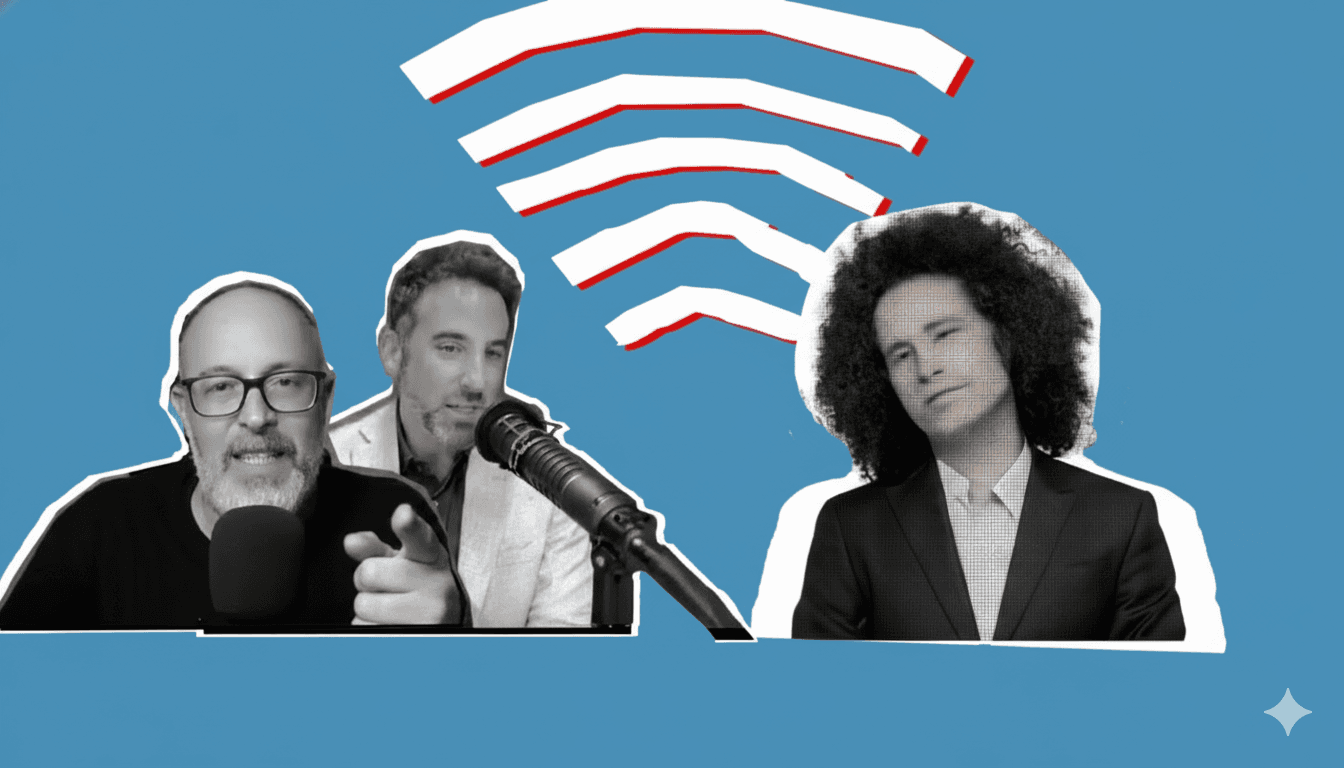
w/ Oded Nir | Coming home עודד ניר - הכי טוב בבית
Share on Social Media
Play Episode
Listen on




I do believe that our goal is actually to unify as a nation, as people, as Jews together, as the Torah is showing it.
Oded Nir


About
Oded Nir
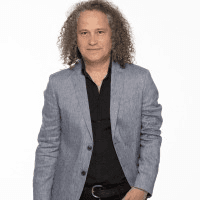
Oded Nir was an Amsterdam-based chill out/ lounge/soulful/deep producer/remixer and the main man behind Suntree Records and Suntree Agency. But one day, he left it all behind and moved back to Israel.
Oded Nir
About
Oded Nir
Oded Nir was an Amsterdam-based chill out/ lounge/soulful/deep producer/remixer and the main man behind Suntree Records and Suntree Agency. But one day, he left it all behind and moved back to Israel.
TheJewFunction Podcast: Episode 116
Host: Lio
Host: Seth
Guest: Oded Nir
Lio: And we're live. Welcome everyone to TheJewFunction, Episode 116. Seth, hello. We have a great guest with us today, quite an unusual guest. But then again, most of our guests are unusual, so he's just following up on the tradition. His name happens to be the same name as my Israeli name, Oded. His name is Oded Nir. He was an Amsterdam-based musician, producer, DJ, artist. You will add, he's got a beautiful list of credits on his website, OdedNir.nl. And he decided to leave everything and come back to Israel.
So we want to talk to him about this process a little bit: the thought process behind it, some of the changes on the ground that he faced and that maybe Jews are facing, maybe the stuff that's not on the news. And maybe we could all learn something from his personal experience about what it means to leave everything behind and come home, I guess.
Oded: How are you guys? Nice to be here. Happy to be live from Israel. My new home. And actually my new studio.
Yeah, I've made a big change in my life, but I was already in process with it because I saw where things were going ahead of time. And I got the confirmation on the 7th of October. And the 7th of October, which is a major game-changer in regards to Jewish relationships worldwide, actually brought to light the modern antisemitism, which is actually old-based. It made Jewish hate and anti-Zionism (which is a nice cover-up for that) cool again and hype. It's quite cool to be that guy.
So everybody that held back all these feelings all these years against us can actually give them an outlet these days, and with authority. The authority is behind it in a lot of ways. So, I believe that a clever person is a guy who sees 500 kilometers ahead and not 100 meters ahead. And I, as a grandkid of Jews who came from Europe in 1919 and 1925, cannot be less than them. In my feeling and the way I look at the world, they saw what's coming, like your ancestors, I guess. And they just went to the US. Well, mine went to the promised land.
And I actually have one, the brother of my grandfather, they split. One went to New York and one went to Tel Aviv. He bought himself an insurance policy for a few hundred years. You said it pretty right. But from both sides of my mother and my father, my father and my mother were born in 1934 in Tel Aviv, and my mother was born in 1940 in Tel Aviv. So these are people who really were there ahead of time. And that's the way I look at myself these days.
Lio: Before we jump into the deep end, maybe take half a step back. Let's just paint a nice picture for everyone before that. Tell us about your life before October 7th, right? Just a little bit, because not everybody knows about who you are, where you came from. They're not all best friends, besties with you like we are. So tell everyone a little bit about what was it like to live in Amsterdam? Maybe even another half a step. Why did you even leave Israel in the first place and go back to the, as some Jews say, "the cursed continent"? Tell us, paint a little backdrop for us before we jump in.
Oded: Sure. I was born in Tel Aviv, Israel, in the mid-70s, in a very nice neighborhood of central Tel Aviv, to secular parents. My grandfather was in the resistance, and I kind of grew up in between. My granddad was in the Etzel, in the Irgun, and my parents were secular left-wing. So I received the left-wing from one ear and a babysitter. When I was with my grandfather, I received the doctrine of the Irgun and Jabotinsky and all these tough Jews thing.
And I grew up to be in the center of Tel Aviv. I was a bass player. I was playing metal. And I was going after... I wanted to be a rock star. That kind of was a goal. And I started to play in the Israeli rock scene and be involved with known guitar players and be a bass player for them. But I wanted to be a solo artist and I couldn't really get ahead in the Israeli music scene the way I wanted, and the way I looked at myself at a certain point as a solo artist.
And then I started to work on electronic, to work by myself, produce by myself, and then came out electronic music, which wasn't the market in Israel. And I felt like I can't get ahead in Israel in that some way. I didn't really need to be there at that time for my career. I went to Cannes Festival in 2006 for the music festival. And there I received a contract for my album from Amsterdam, the Netherlands. And I used to like to go to Amsterdam for different reasons. Let's say it like that.
Lio: You can say all the reasons. This is not for kids.
Oded: I like to have a coffee in a coffee shop. I'm like Bill Clinton. I never inhaled. And I went to Amsterdam for a couple of months to make my album. And after I arrived, two weeks after I arrived, the record label went bankrupt. So I found myself without money in a European city. I don't speak the language, which I don't understand anything. With eight tracks, unsigned tracks now, because the label went bankrupt. And there the story started. Terrible weather. Language that I don't understand. But nice coffee shops. Great coffee, for sure. Although I heard that in the US the coffee is better, but we'll talk about it in another chat.
And then my story started. I started to fight on the streets, I would call it, because I am a street cat. Tried to fight for my career, to save my career, because I'd made a big article in Israel that I'm going to release an album in the Netherlands, and you cannot come back after that kind of article. So I started to fight, and I understood that I learned from American Jews and others that I got to be better than others to get ahead because I'm there to sell ice to Eskimos. Because what Netherlands needs now is another DJ. You understand what I mean? I got to be better than others.
Lio: At least you weren't in Berlin.
Oded: Maybe you guys know better than I do, because that was a bit different in Israel. But I needed to be better than others. And that is something.
Lio: That's very Jewish. That's a very Jewish concept, my friend.
Oded: It is. And that's the most truthful concept there is, because it is true. And I had to struggle in that way. And I came already in 2006, which was a hostile environment for Israelis because it was the middle of the Second Lebanon War. And in between the Second Intifada, Gilad Shalit, the environment in Europe was already harsh.
So I understood that in certain ways, I need to learn Dutch quickly in order not to give them the feeling that I'm an immigrant, in order to confuse the situation, to learn how to be a native, because as an Israeli, as a Jew, I'm not going to go anywhere. And that was clear to me. As a Jew, it's one thing, but I have to be Roman in Rome. If I won't be a Roman in Rome—which is different in the States because in the Netherlands, the dollar is not the boss in that way—and I understood it.
So I started to DJ and play bass at the same time because that nobody has. So I had to find a point where I could be unique. And it was two in the price of one.
Lio: Listen, they just figured it out. On the spot, you just came up with this trick.
Oded: I was a bass player, but as a DJ, I wasn't as good as they were in my eyes. So I said, if I bring an element that they cannot do, then I'm going to be the winner. And I came to win, not to lose. So I was starting to work on a show where I'm DJing and playing bass, and I actually added keyboards because I play keyboards too. I was trying to push a lot of things to show how talented I am, and then I understood I had to kind of filter things out and stay with the bass as a DJ. And I started to go ahead.
And actually, the one who put me in was Chicago-born and based DJ Gene Farris, who actually became my first friend and introduced me in the Amsterdam nightlife. And he put me in. It wasn't easy. And it was really difficult, to be honest. I started to go... Yes.
Lio: No, no. First of all, just this glimpse already told us a lot about you and about the way the Jewish mind thinks and works. This is good because we assume everybody knows and understands it. And that's why we oftentimes succeed in rising to the top in different areas, but we fail miserably at communicating who we really are. What are we? This is not a clear thing. It's almost like two types of people who are working in the same place and everyone assumes the other is the same. You assume that the other DJs are like you, but a little better, so you have to be better. They assume, and you also assume that they assume that you are like them. And so there was this assumption, but it was incorrect. The reality is that Jews are a different breed and it comes out in these interesting ways.
So, fast forward for us. You find your place, you find your niche. It works. You live there. You start a family there, or am I?
Oded: I had a bit of a... I'm a little bit, I would say, I'm contradicting myself in the way I am and the way I live and the job I chose. Because I arrived already in the Netherlands kosher and tefillin and everything, which is a bit strange for a rock star DJ. And I wanted to marry only a Jewish woman. And I put myself in a big mess in that way. Because that's not the place. It's not America. Okay, this is not the U.S. And I put myself in a very difficult spot where I'm in an international city of wild people, and I'm already some kind of... and I was a younger guy who comes from wicked Tel Aviv and into the thing, but still want to marry a Jewish woman.
And in that way, it was very difficult. And I found myself experiencing in different fields other than Jewish women, which put me in a conflict and it didn't really work. And besides that, being kosher there, it was very difficult. It was very difficult. And I was trying to live a Jewish life in a place that doesn't.
And also, a lot of the Israelis there are going there in order to step back from what's holding them back or what is making them different than others. They try to blend in as much as possible, where I was making sure that I did not completely blend in. But in time, when you are living by yourself... because the only thing a musician needs is music. He doesn't need anything. I had music. But at a certain point, you get lost in it in such a way that I started to forget certain holidays—not High Holidays, you understand—like Shavuot or Sukkot, which is a High Holiday. But which Sukkot am I going to sit in Amsterdam in my one-bedroom apartment?
So I did a lot of things to maintain this kind of separatism from them so I will stay with my identity. But the Israeli identity started to fade out. The Jewish identity was always there because I was putting on tefillin every day no matter what. So in that way, that kept me in. But the Israeli identity and the lack of a life with Israeli communities there pushed me away from that. And that was, looking back, a bit of a problem.
Lio: Why was it a problem?
Oded: Because looking at it in that way, I was starting to step away from my identity. And identity is everything in a person's life. And what people sometimes forget, is that the most important part is cultural identity. Your identity is everything. And when you lose it, you lose yourself. You understand what I mean? Where is that identity? What is that identity?
Seth: Are you born with it? Do you develop it? Is it a dream?
Oded: You're born with it. Your parents and your society educate you into it. It's called the community. We in the past, our ancestors, let's say us three, our ancestors had a community in East Europe. They lived in a certain identity in the shtetl, in the Jewish ghetto, in Ukraine, Russia, Poland, Belarus, Romania... and same in Arab... Romania? Russia, right?
Lio: Yes, sir. Russia and Ukraine. Yeah, Russia and Ukraine. We actually had a bunch of Bratman guests here on the show already. There's a big tribe, the Bratman tribe.
Oded: So, you know, even by the Sephardic Mizrahi Jews, like my wife from Iraq, they also had the Mahallat al-Yahud, the Harat al-Yahud, the shtetl over there, where they kept their identity. And there, when you're going out there, you're starting to lose your identity if you don't live in a community. An identity of a national, proud, Jewish, Israeli person that I am.
Lio: I want to ask a question here, which I didn't plan on asking, but it just feels right. Because I know we're going somewhere with it, but it feels like, as I hear you speaking about, everybody has their identity, which was like this Jewish identity clothed, colored by the local culture where they are, but it's definitely a Jewish identity, right? A Jewish Iraqi, Jewish Polish, Jewish Russian, and so on. And then we all come into Israel.
And what now, from where we are now, I'm looking at that phenomenon of Jews leaving those homes and coming to Israel. I would expect them to now add something, like grow their identity somehow, make it stronger, even more unique, because now there's also Israel involved. And what's Israel in all that? Because Jews are unique in the landscape of nations, and Israel is certainly by extension as unique as well.
But what happens is in the last, I don't know, 50, 60, 70 years of Israel, it's almost like a shedding of layers from the identity to try to become like a lot of the other nations, in a way. Do you feel that? Do you feel that this is something that happened to us in this process? And instead of sort of going one up in the identity ladder, let's say it becomes even more unique, we kind of went into this, took half a step down. Like, let's just be like everyone. That's the feeling I had growing up. Everybody just wanted to be like everyone. We're just like everyone else. Leave us alone. What do you want?
Oded: Yeah. Look, I do really think that the process of trying to make a Jew, to put him in the globalization process, to make him a person of the world, to make him like everybody else... That's actually the goal, which is going to fail in every process and attempt that we're going to make. You're going to fail. Why is it going to fail? Because it's not your destiny. It's not your destiny.
Look, you can be a believer or not. Okay. Let's say that you are secular and I'm much more a religious person. Okay. So in the Bible, it says very clear. We are living alone. We don't consider the non-Jews. I don't like to say goyim. The non-Jews.
Lio: Gentiles. You said Gentiles.
Oded: Let's go with that. So I believe in that as a person of belief. But let's say that you are secular and you don't. But every attempt that you make along history, it just leads you to the same point that this thing doesn't work. Also, because when you're not going to do your job, the Gentiles are going to show it to you. Because we need them constantly to show us who we are. And that's actually what happens every time we try this globalization thing. They are coming to us and they're telling us who we are. We need them. You read the book.
And not only that, without them and without antisemitism, we will be gone long ago because we are trying to get there all the last 2000 years, even more. We are trying to get to that point. This is our constant trial.
Seth: Which point?
Oded: To be like everybody else. At Mount Sinai, Moses went up. Well, he was up. They already tried it downstairs. And they already tried it downstairs when he was up. We didn't even wait a couple of hours. And that's...
Seth: Hold on, Lio, you're muted. We don't hear you. Hold on, Lio, we don't hear you. What happened?
Oded: Okay. So basically, I know maybe you want to say we did wait a couple of hours for a couple of days. I'm not going into the Torah's small details.
Lio: No, no, no. I was actually saying absolutely we didn't wait because those are two sides of the same coin that left a choice in our hands. At every moment you wake up, what's more important to me? The upstairs or the downstairs, right? The connection with the creator or the gold?
Oded: You're taking me to my point. And basically, every time I tried to be that rock star DJ and popular, and I came in a group of DJs into a table in a restaurant, everybody's successful, everybody has his recognition, and then they order Caesar salad. And I see that Caesar salad has bacon on it. So I say, "Waitress, can you just make one Caesar salad without bacon?" So everybody asks, "Why not bacon? You don't eat bacon?" "I'm a Jew."
So in that point, I wasn't like everybody else. And you know why? Because they made me feel it. They gave me the feeling.
Seth: What would happen if you ate the bacon?
Oded: I will never eat the bacon.
Seth: It's not a matter, but why? What's the thing that doesn't allow you to do that?
Oded: I'm kosher.
Seth: I know, but what's the thing that makes you make that decision?
Oded: I have to be different than them. In the table, that's going to make me different.
Seth: Again, what's the thing that makes that, that doesn't allow you to just be like everyone else? What's the thing?
Oded: Yeah, you said, I don't eat that. Okay, but why don't you eat that? Because I'm kosher. Okay, why are you kosher?
Oded: Because I'm a Jew.
Seth: A lot of people are Jews.
Oded: Well, I'm going to show in every point who I am. If Yitzhak next to me is hiding, okay, my job is not to hide.
Seth: But hold on a second. You're not wearing a black shtreimel when you go out. So it's a specific place that you're showing and not in every place. So I want to understand your place where you made the decision and what it is and why from that decision.
Oded: Because they don't expect a guy like me to be like that.
Lio: He's still the performer. He's got to show them.
Seth: Nobody else is bringing the light to the DJ scene in Amsterdam. So his job was to bring it down.
Oded: I wasn't sure I was bringing light. But what I was doing is doing Kiddush Hashem BaRabbim, in front of people. I needed to show that as much as I'm like you guys... It's a good question. You caught me there. It's like when I'm with you guys, I'm like you guys.
Seth: But somebody else wouldn't have even gone in. Somebody else, you know, who's... wouldn't have even eaten in that restaurant. But for you, in the restaurant, there's always...
Lio: Or you would have said you were a vegetarian, end of story, right?
Seth: But you specifically had to go to the thing where it was going to come to people's face.
Oded: Give me the bizayon. Yeah. You understand? Do it to me a little bit. It's a matter of belief.
Lio: Totally, totally. And the reason why we're asking these questions is because we think, and we already... you started to circle that when we were starting to circle the mountain metaphorically and historically... that there is something that happened around that mountain, and we talk about it a lot, which is still happening today, and that choice still applies to us today. And that's the choice that we need to be making and we're not making, and the antisemites help us remember that we have to be making this choice.
But I want to hear from you, what do you think this choice is and what is really our place in it? Because the whole premise of TheJewFunction is that there is a function. Humanity is a network, is a system, and like every network, there are different components in it, and Jews play a specific role, an important role. If you take the emotion out of it, there's a really good reason why the system needs such a group of people. And I'm curious to know what you think this reason is. Just not eating bacon is probably maybe a more external feature of that, but it's not the main reason. So, I'm curious to know what you think that reason is. What is the... what is it?
Oded: Can you just make it a little bit more clear? What... what is the Jew in the system?
Lio: Exactly.
Oded: Okay, we are the chosen people. Now, if you say "chosen people" to a non-Jew, he will take it to the negative spot that I'm more special than him. My role is not that. My role is to be separated and I have more duties than others. I have... I don't want to say a punishment, but I need to show the light. Okay. I need to lead in that way of taking a mitzvot... I'm not saying mitzvot.
I mean the fact that I'm sitting there with the bacon, as you take that as an example, is to show them that I have burdens that they don't have. And I am some kind of barometer... Barometer? You say... I said it correctly. It's in Dutch, barometer. ...of the society. If you look at it, every... we spoke briefly before we start recording... every war, major war, and conflict is somehow linked to the Jews. Why is that? Because we are the barometer of the society and the world society. And that is actually the chosen people, as we say. We have things to do that other peoples don't have. We have burdens that other people don't have. We have measures that we have to walk through in order to show the other people the right way. And I think every time that antisemitism is going through the roof, it's connected to a loss of balance in society and where we need to lead in that way. You understand?
Seth: Where is that today? This is... it's fascinating that you also arrived at this conclusion. It's good to know that other people are realizing this and not, you know, the typical thing out there is just "fight against it." You know, legislate against antisemitism instead of understanding the essence of why it's happening. So it's very refreshing to hear that. My question to you is, where is it leading us today?
Oded: I just want to say something very quickly, Mamdani, he works for me. That's how I see it. He's doing Hashem's work perfectly because when people don't wake up, He sends them somebody to remind them who they are. Again, he's working to wake up the Jews. We need this when we are lost, like on 6th of October, we were lost in Israel.
I was still in Amsterdam, but I got married in '23 in Israel. And I had like 30 people coming, 50 people coming from the States, from Amsterdam, from London, from Spain, from a lot of places. And they came here and they saw all this madness in the streets and I saw all the madness and said, "Shit, we're going to get it. We're going to get it because we're at that point that every time we get to that point, we get a slap. And we're going to get a slap."
Lio: Because when your father loves you... he who spares the rod hates his son.
Oded: Yeah, thank you. I actually needed you for all these American translations. And this is what we're experiencing. And Mamdani, he comes to remind us who we are. And all these people who voted for him from the Jewish community in the USA, they're going to get a big reminder who they are now. And he's going to do that job for us.
And I really... it's kind of sad that we need reminders like that every time. It is sad, because something I said in many interviews now, in the last four months, I'm busy with this and with the war of antisemitism and saying my word everywhere. And I said, I'm going to say it again: The hardest thing I discovered in the world is to show a Jew that he is in danger. It's the hardest thing I ever saw. To show a Jew that he's in danger. He's going to tell me, "No, but no, but you're wrong. But he doesn't mean it." What the hell is going on here?
It says in Yeshaya, please translate me.
Lio: You're sold for free and you won't be redeemed with money.
Oded: Money got nothing to do with what we're talking about here. That's why I left. Money got nothing to do with what we're talking about. Money is the cause for all our problems in that way. We made the golden calf in Mount Sinai. We didn't want to leave Egypt because of the free garlic, zucchini, and onions there.
Lio: Come on, free garlic. How can you... What?
Oded: Free garlic. Come on. How are you going to... We didn't want to leave Babylon and we didn't want to leave Yemen.
Lio: No, it's true. Nobody likes to make any changes, let alone Jews.
Oded: Nobody likes changes in general.
Lio: Yeah, and Jews, we get comfortable.
Oded: I don't like to pay taxes.
Lio: Okay, we're going to bleep this one out. We don't need that. The question is, so I think the question in everybody's minds, if there are any stubborn Jews listening, any stiff-necked Jews out there who are considering this, what made you eventually pack up and leave? Maybe you can give a few tips for the confused Jew, for the perplexed, just like Maimonides' book, Moreh Nevuchim, right? A guide to the perplexed Jew who's not sure if the mayor of a city is a Shiite Muslim who wants to globalize the Intifada and support the killing of Jews... if that's not a big enough sign, what else should I be looking for as a Jew before I decide to leave? Or what helped you leave? Let's ask this way.
Oded: You said it pretty well, actually, about New York. So I'm going to tell my European story, which is much more in that way. Look, I've been to several waves in Amsterdam of antisemitism. Okay, when I came in 2009 in Oferet Yetzuka [Operation Cast Lead] war in Gaza, and then Tzuk Eitan [Operation Protective Edge] 2014 war in Gaza. And every time it started to go up, and then when the war went down, it went down. But what you discover, that the same people who are against you, or demonstrating against you, are not going to just vaporize from the world. They're going to be your neighbors. They're going to be the guys who give you services. They're going to be the guys who are living with you together next door, who are just waiting to see you go down and going to do whatever they can to help them. That's one.
But my point was, and that's what I call my personal guardian about it, because on 7th of October, I started to, because of my work as a DJ, I have to go to locations. So I'm moving in the streets where I know so well in Amsterdam. And I'm everywhere, signs. And, you know, two days after 7th of October, they already started to flip on me, on Palestinian flags in the window. All the Ukrainian flags suddenly swapped themselves into Palestinian flags. So all the neighbors with Ukrainian flags just replaced it with a Palestinian flag. So what we're talking about here, what kind of people are these?
But besides that, I started to video and photograph all the hatred I see around me, all the parades, all the chanting. And it started to escalate and escalate and escalate. And the academy, the universities are pumping hate against us all around with the young people, starting to join the Muslims in the street. And actually the Dutch were the one who started. I'll never forget that DJ. I'll never forget him in my life. But I remember him. He put up a Facebook photo. "Don't forget who is the real victim here." A day later. He was so scared that people are going to like me by any chance. So he needed to remind everybody what happened. That I'm not the real victim. It's just not me. Not the women who got raped, the kids who got burned. That's not victims. The real victim is not the Jews.
And then, my wife started to get very scared in the Netherlands. A woman who comes from Israel, after her love, into Amsterdam, who is a Zionist, is a religious, traditional woman who sees everywhere flags. And with her eyes, I started to realize what it is to be an Israeli in Amsterdam because I speak fluent Dutch. I don't look like a "state Jew" so I can blend in very easy. But from her eyes, I started to see the fear.
And then came the Maccabi Tel Aviv game against Ajax in Amsterdam. And all roads are leading to Rome. I was not supposed to be in that game. I was free that night. I didn't have a gig. And a friend of mine works for Ajax. He called me and asked me, "Listen, I got a free ticket for you and me. You want to go to the game? Sit from the Ajax side, not from Maccabi side, from the other side." I said, "Wow, sure. I love it. I'm sitting in the arena watching a football game." And I went there.
And that was my, let's say, eureka moment, where I understood who I am, who they are, and what the situation is. Because already in the metro, on the way to the game, I took a metro to go to the stadium. And there I saw a couple of these young Israelis with yarmulkes, a bit tipsy from alcohol or other "coffee" that you have in coffee shops. And they were like every football fan.
And then started to come the Muslims with the Palestinian flags, getting close to them. And I came in between them because I wanted to protect my brothers, but I can keep an identity so I can work with this side too, with my Dutch and my knowledge in Arabic because I speak four languages, which is helping me a lot in survival mode. That's why I learned languages for survival.
And then I saw the Dutch security of the trains coming to the Muslims who are trying to make a conflict and telling them, "We are with you," in Dutch. "We know they are the bad guys. We support you guys." Really? And then it flipped me out. I got completely flipped out because you didn't know that I'm one of these guys. You thought I'm one of you, but I understood what you said and I know exactly how you said it.
So I came, you know, to explode. But then I thought, we are still in the Metro. They are going after these guys. So my goal was to take them out from a point in the stadium that I know that sits a police station there. So I was coming to them quietly and telling them, "Dear, stop the noise. Everybody's against you in the moment. Follow me. Let me take you out of here." And that's how I took them out from a police station. And that was before the pogrom and before the lynching. And that's before the game. I already saw where it's going.
And that was actually enough for me to hear the Dutch security making a deal together with them on the Jews, on the Israelis. I can't forget her face and I can't forget her. I'll never forget her. It was an arrow to the chest. Because she exposed herself. And that exposed me, too. To me, she... recognized me to myself, you know. I understood who I am that moment. It doesn't matter what kind of globalist, cool DJ I am. It doesn't matter. If you put a yarmulke on my head, that's it. That's a small difference, bro. A yarmulke on my head and then I'm just... she's against me too. Everybody's against me here. You understand what I mean?
The police... and the obvious thing, after the game, the Dutch police said in, I read it in an article, "We have a problem protecting Jewish monuments and events and people, also because of conscience." What do you mean, conscience? What is the problem with your conscience? What is the problem here exactly with your conscience? So I understood that no Dutch policeman will catch a bullet for me. So I'm living in a country that I'm not really protected. And not only that, I need to play a certain game in order to be a successful artist, which I'm not going to play anymore. I'm not going to play anymore. I'm not a kike. You're not going to find me in that way. It's the pot of meat. The money, the pot of meat, you know, buy some other Jew with that, not me. That's it.
So thanks for sharing that story.
Oded: I experienced that night a very hard thing after the game. In the tram, you know, that above-ground train, which I kind of... I'm not going to be the same guy again after this game. And I was supposed to leave early the tram because I arrived at the stop where I'm actually supposed to get out and walk seven, eight minutes to home. But I went with them to the central station. I felt I need to go with these guys. I need to look after them because they don't know where they are and I know the streets like my hand. I know the streets of Amsterdam better than any city in Israel. And I'm from here.
And I took them from the back when the pogrom started and put them in a tram and found myself... the tram stopped behind the royal palace because of the pogrom.
Seth: Didn't they just take their kippahs off or put a hood on and a baseball hat on?
Oded: These guys didn't have a kippah. This was not religious Jews after the game, these guys. But they had Maccabi fans, shirts.
Seth: Take the shirt off.
Oded: Well, it was mid-November. It was five degrees. So they did. They took the shirts off. But the tram stopped and it was only me and them. They're speaking Hebrew. So I started to shout in Dutch. So the conductor and the driver get confused, because they were Arabs too. So I knew that they're running from here. They're running from here. They're running with sticks from everywhere. And I'm in a pogrom in the 18th century in Ukraine right now. And I need to lead this orchestra because I'm the only one from here in this thing.
And it was a very long 10 minutes when I was shouting in Dutch and already thinking what we're going to do when these guys are going to come up. Because they're going to come up. So I told him, "I'm going to speak in Dutch to you guys. And you respond like this. Yeah, we got to keep you undercover." It was long 10 minutes. Very long 10 minutes where I got connected to my Israeli identity again in that realm. Because I was with these guys. And that's it. I knew who I am.
Lio: Well, it's great that you just ended up on this line because it brings us back to our, let's call it our agenda here. And that is that, when I asked you in the beginning, did we, when we talked about how we were supposed to go up on the identity ladder when all the Jews actually moved to Israel after 2000 years. But instead, we started to go down. We took down half a step. We're getting closer back to the nations. This, for us, this is really where it comes down to that choice. Are you choosing to be identified with the concept of Israel, the inner concept? Not simply the piece of land in the Middle East where everybody's at and everybody's fighting. No. What is the meaning? Why did you come back to Israel? You could be a Jew anywhere else.
Seth: It's interesting. Last week, we spoke to a guy whose whole thing was like... He's like looking at the stock market. He's discovering just which country. Since things are always changing, you need to find which place is going to be safer and get to the... Before it happens and move there.
Lio: And we're saying, and what Seth and I are saying is, actually, the fact that Israel suddenly was given to the Jews, this is not a coincidence. It was given to us. We didn't receive it yet, but it was given to us. If you actually go into the details of how the state of Israel came to be, like a legal entity, it's mind-boggling, right? The amount of things that had to happen, and if you just chalk it up to coincidence, fine, good luck with your life. But, the fact that Weizmann was working as a chemist and he was friends with Balfour and all kinds of this little things that had to happen to make this happen. And you realize that this is a whole, there's a force, there's a guiding force that just moves things where they need to go.
And so for us, the identity of Israel is those who want to go yeshar el, straight to the creator, straight to the force of love and bestowal. That is what we found to be the guiding principle, that destiny we're talking about. And not Seth and I, two Jews from Jersey and Tel Aviv. No, all of our sages are talking about it for thousands of years. They all say the same thing, except we don't want to listen. We want to do everything else. We want to do everything else but that. "Oh, you have to love the other as yourself?" Okay, yeah. That's it.
Seth: Shbeek, Shbeek. When you say we don't want to listen, right? It's like, well, God told Adam not to sin, but he just wanted to sin. When you say we didn't want to listen, it's like, how can you actually do anything against God? It's impossible.
Lio: Well, okay.
Seth: Let's understand that we're in a system and how the system is operating. It's not like someone says, you know, God told you to do this, but you decided to do something else.
Lio: Well, so we'll let our guests weigh in on that. But I'll just add that, yes, we are human. And as humans, we were given a tiny bit of free choice, not a lot. I think the show started with that telling us that how he's the product of his father and mother and grandfather and all of that. And we are. By the time we come out of the oven, it's all baked. But you can choose an environment and you can choose a goal that's higher than simply filling your belly, filling your pocket, filling yourself with respect and power and all of that. These are the natural things that you were created with. That's fine. Nobody's talking about that, right? You like to eat five burgers. You like to drink five coffees in the coffee shop or one coffee in the coffee shop. That's fine. Whatever works for you, right? Whatever gives you pleasure.
The question is, as this creature, do you want to choose to become a human? That's what we're talking about. That's what this whole Jew function is about. Adam, from the word Domeh [similar], similar to what? To the upper force. We are called Adam because we are destined to reach a resemblance and a similarity of form with this upper force of love. Just like He is love, He wants us to do that and we need to choose that at any given moment. That is the only choice we need to make. Everything else, do whatever you want. Go, be a DJ, do this, do that, climb the mountain, go to the moon. But along the way, how do you do it, right? What do you show to the world? That's the place of choice. And the question is, why is it so hard? I think it's clear why is it so hard. I think the real question is, why aren't we banding together to make that choice?
Oded: Look, I must say, when you said about the other guest that was, I didn't hear it, so it's hard to comment on something I didn't see, but looking for a place on the scale of where it's safer. Isn't that like that wandering Jew who takes a bag of diamonds and runs from one city to another? Isn't that the reason why the state of Israel was formed? In order to step out of that game of running away from one city to another with a bag of diamonds that you put under the table?
Seth: Just to have the land of Israel doesn't solve the problem yet, as we understand now. There's something else that has to happen. Lio said the Torah was given to us, but we didn't receive it. The land was given to us but we didn't yet receive it. What does it mean? Does it mean we just set up our own... well, there's no such thing as Paris anymore... but our own Paris in the Middle East or our own... just to have our own country? Or what does it actually mean to be this people in this land? What does that mean? What does it go straight to the creator? What does that mean to you?
Lio: Maybe you'll tell us, what does that mean to you? Because clearly, it means more than just not eating bacon in the Caesar salad.
Oded: I really think that for me, well, there is the concept of Erev Rav and the concept of Israel. I do believe that the purpose of Erev Rav is to...
Lio: Mixed multitudes, you can call them.
Oded: How do you say it?
Lio: Mixed multitudes.
Oded: Mixed multitudes.
Seth: These were the ones, these were the Jews, for everyone who doesn't know, these were the Jews in Egypt who didn't leave. Not everyone knows that also because we didn't get a good education, but many of the Jews didn't actually leave Egypt. And in each place in our history, there's always a group of Jews who don't go with the storyline that we learned about.
Oded: Okay. I do believe that our goal is actually to unify as a nation, as people, as Jews together, as the Torah is showing it, and actually, as the events of the world are showing it, and our history is showing it. And there is always going to be an attempt to prevent it from us. And that is actually what you're claiming to be that kind of struggle.
I believe that you guys are a blessing. And when you are living in America, you're bringing your blessing to America. And I believe that when all the Jews will be together, will be such a blessing to us especially, but to the whole world in generally. That will be the Ohr LaGoyim [Light Unto the Nations], and that's our purpose.
Seth: What does it mean that all the Jews will be together? This is beautiful. So what does that next step look like?
Lio: Or how do you even get there?
Seth: Well, the how is more complicated.
Lio: No, we can maybe weigh in on both. While we have him, he's a good guy. He's got a good head.
Oded: Basically, I think what we're seeing right now is the way over there. Because I think the time of question is coming to an end. And I think that what we're seeing is speeding up events, as I call it, 10 years in a day. What we're seeing right now is speeding up all processes, so that we almost have an event of 10 years happening in one day.
And actually, I think that, as I said, Mamdani works for you. He's just trying to push you over there. And I think, listen, when you are doing your destiny in life from the start without the kick in your behind, then things are going well. But when you're not focused and you don't hear and you don't see what's going on, the kick in your behind is going to get harder, more painful, more destructive, and much more violent if you're not going to hear.
It happened almost 100 years ago. We didn't have a state. My grandfather was there trying to build everything up for you, for you guys and for me and for everybody else. But we didn't listen. So now it's going to be another round. And I think this round will sum everything up. Listen, to say how it completely looked, going to look, I don't know. But I guess it's going to be similar to the 50s in Israel, but much more progressed. I do believe that the times are going to get harder and harder and harder until everybody's going to listen.
That's my geopolitical, let's say... not spiritual, but let's say more geopolitical view, that the times are going to get harder for the ones who don't listen. Now in America, for example, what we're seeing right now, there is a beautiful little Israel in Florida. That place is very important for the Jews right now. It holds a big part of the Jewish world over there. That part will be very clever and will progress amazingly. But until a certain point, in my belief, until a certain point. In a certain point, where are you going to go from Florida? To Cuba? To Michigan? For sure not. Where are you going to go from Florida? Only to me. I have a nice place next year, there's a villa for sale if anybody is interested. I really think this is going to be only one way. There's a limit how long we're going to be blind and deaf.
Lio: By the way, just an aside, since you brought up real estate. Even before the Holocaust, there were these negotiations going in the background people don't know that about where to send the Jews. There was the Evian Conference and they were like, "Where do we take them? Let's send them to Alaska." "No, it's too cold." "Let's send them to the Caribbean." "No, it's too hot." "Let's send them to Australia." "Oh no, we don't have a problem with antisemitism and we don't wish to import one." So every place, we think that there are options. I think all the signs are already foretelling what will be.
Oded: That's what I'm saying. And not only that, when I came to do a gig in Ireland in 2016 in Dublin, I don't know why I say it right now, but it is a point. Every time I'm going to a location around the world, they're reminding me what's the future there. He told me, "You know, we got a saying in Ireland. In Ireland is the only place around the world there is no Jews and snakes." So, you know, that's the thing they told me. I came to do a gig. But I'm coming from the Netherlands. So it doesn't really matter. He didn't know you were a Jew. You can tell that to me. I'm coming from the Netherlands. You can tell me. We don't have Jews and snakes here.
So it's among little things that I heard around the world when I was playing. Actually, the place I got the least antisemitism around the world is China. There, I only got admiration and love. True. Very surprising. But everywhere around the world, I heard the local thoughts about... and it doesn't look good, guys. Didn't we try this for 2,000 years and it never worked? It never... why should it work now? Statistically.
Seth: So we're all on the same page. We need... facts don't really matter that much. It matters to us because at least we understand the situation clearly and we're not living in a hallucination. But when it comes to the greater population, they don't move by facts, as we can tell, because most of the Jews didn't leave Poland. Most of the Jews didn't leave Germany. Right. Facts are not what... Facts maybe move the top of the pyramid, the qualitatively more advanced, but the masses of people don't move by facts. They move only by feelings. And usually... or by other people, or by getting connected.
Feelings, too. Beaten from... you know, it's all feelings. I'm just saying. So our work then has to be... because the argument's clear. We all get it. And we don't need to lay it out here, but Lio always lays it out when it's not clear to people. We have a lot of data over thousands of years that show the same trends. If we were betting on stocks, we would be the Warren Buffetts of this business because we predict the market like Nostradamus. It's clear what's happening.
However, if our goal is to not just save our own skin, but to communicate this to the people... And by the way, if we're just running a campaign to save the asses of Jews, that's one thing. But we're talking about world peace. We're talking about a messianic era. I mean, that's really what we're talking about. We're talking about "my house will be a house of prayer for all nations." So the first step is like, "Okay, Jews save their ass." But really, if we all just ended up in that tiny piece of land in the Middle East, we're just going to have another problem after that. We have to find a way to unite. And when we unite, then the light comes through us to the world.
Oded: But what do you mean another problem when we're going to be in that tiny spot?
Lio: No, meaning what he says is that just moving physically, taking this protein bag from one place to another, that's not the correction. It's simply giving you a leg up on the way to the correction. It creates the conditions, you bring all these Jews together and they have, for the first time in 2,000 years, a bit of peace and quiet. Obviously not for long. The clock is ticking. If you don't unite, you're going to start to feel the friction. You have to make efforts to show the world that you are capable of holding two opposing views and still uniting in love above them. That's your mission in the world, habibi. That's the thing that nobody else can do and Jews, through some miracle, can do sometimes with the right arrangement.
Anything else is not going to work. As we were talking, I'm sorry, just fresh off the press, there's a Jewish president in Mexico, right, who has a slight... she was infected with a slight case of auto-antisemitism. Yeah, but now, it didn't help her. Someone just sprayed on her house, "This is a Jew." Just to support everything we've been saying, right?
Oded: What's that? If you're a useful idiot, you're going to be reminded that you are. And look, you can't escape from that. And you're saying we have to unite in Israel. We have to unite as Jews. That's the mission. First of all, putting yourself together and understanding from logic, not about facts, you say, or data. People have to sit... let's say there's a lot of non-believers and non-religious Jews for your show. Okay, secular people from America. Ask yourself simple questions. Why a day after October 7, everybody started to flip on us when we were evicted? Where is the women organizations about the rapes? Where are all these people gone? Who is going to be behind you?
When you understand that us three must be together, although you're not an Aryan blonde with blue eyes that I would like to surround myself with and see myself as one, it's not going to change. Everybody looks so beautiful to me in Israel right now, you know? Everybody looks amazing to me because that's the correction you were talking about. Because I feel the modern antisemitism in Europe in such ways that everybody looks beautiful here to me right now.
And the people who push me in the line or shout or behave without politeness, I take it way easier than before I left. Because the other girl, the person in line over there in Europe who lets me stand quietly, who lets me get to my point, but he wishes me dead all along, and if he could help that happen, he would... And that guy who's pushing me in the line, if I won't have food on Shabbat, he will bring it to me. And that's a major point of reconciliation, as you said, Seth. That's a way over there.
And you know, so many insane things are happening right now that have to show you that all roads are leading to Jerusalem. Why the LGBT community is uniting with the Muslims and the Marxists against... what the hell is going on here? The LGBT community voted for a Shia Muslim, guys, in your city, in your area.
Lio: Well, they're confused about a lot of things and, you know, municipal politics is just one of them.
Oded: Confused. You're giving everybody such a major discount.
Lio: No, no, no, no. I'm just saying, look...
Oded: You read and they are confused. People see the data and make their own choice. They think they're going to save themselves by aligning themselves with that guy without the yarmulke.
Lio: I'll tell you, we take full responsibility, Seth and I. Actually, that's the reason why we're doing this show because we recognize that on their own, those who are lost or let's say confused, misinformed, don't want to see things, whatever you want to call it... It's because we didn't do a good enough job communicating to the world that there is a higher reason to be alive. There's a higher, deeper meaning and there's a bigger plan. Okay. And it's hard because people either are associated with some weird religious concept, which they don't like, or some strange philosophical concept, which is just abstract and out of reach. And that's how I saw it also growing up, as a secular Israeli.
But when you dig in, when you peel the layers and they are becoming easier to peel every day now, you see that there is an amazing plan and an amazing process. And we're part of this. And you can be part of something huge, tremendous. And you can have this realization like you had. And you can have this awakening and you can feel this love toward the shouting Israeli in the line. That's good. That's something that everybody can have. And so we need to do a better job spreading the word about this. And I think you're doing a pretty good job yourself as well. So, we need to bring this to... home. What would you... what can someone do, wherever they are?
Seth: Let's just, hold on, Shbeek, let's add one more thing also. Also the last guy who we spoke to was a very smart guy, by the way, and he loved Israel. His life situation, his family, also I think was a child of Holocaust survivors. This was how he was formed, right? But he also brought up to us that, and I didn't verify this, but he said more people have left Israel since October 7th than moved to Israel since October 7th.
Oded: By the way, I've been exposed to the numbers. The real numbers are not advertised in the Israeli media, which is making me asking where is he bringing the stats from.
Seth: Okay.
Oded: We have to take under consideration that we are talking about '24 and '25. '25 numbers are not really revealed yet.
Seth: Okay, let's say this. It doesn't even matter what the statistics are. The fact is tens of thousands of people left.
Oded: And tens of thousands came back.
Seth: Okay, but also tens of thousands left. So in light of Lio's question, we have to cast a very big net. We have to also find out, Lio, get ready to summarize this question again, okay? First of all, we have to cast a very big net. Second of all, within that, we need to find where the low-hanging fruit is. We can't get to everyone right away, but we need to start to create a critical mass where we can, and not just with people we agree with, but from all the different, from the rich ones to the poor ones to everyone, we need to somehow get some critical mass. And then also we need a compelling story. Besides just, "we're going to get our asses handed to us again."
So three things. One, we need to cast a very wide net because we don't know if these are... some people are leaving. Some people are coming. Some people are in hold. Some people are in the land. There's some people in the land of Israel that are our greatest enemies, Jews. And then there's some advocates somewhere in Chicago who are big advocates of the Jews. So cast a wide net, find the low-hanging fruit, the ones who we can already start to create this critical mass, and three, have a very compelling story, a compelling goal for us, besides just "we're going to get our asses kicked again." Lio, if you can try and summarize all this...
Lio: Yeah, I would like Oded, from the height of his unique experience, because not everybody has that unique experience that you had, right? Living in Israel, moving out, having to fend for yourself, keeping your unique Jewish identity, surviving the whole thing. Surviving, then making the decision to come back after this life, this moment in time where everything changed, that eureka moment you had. This is a unique process, and we really can't afford to wait for everyone to have that particular process.
So the question is, what can you say to someone who's asking himself, what should I do right now where I am? Surely not everybody has to pack up and leave necessarily. It's not just about, as we said, geographically moving your body from one place to another. There's something deeper at work here. What would you say? Give an advice to some people who are scratching their heads and thinking what to do. What can I do? How do we get this maybe inner evolution going for us Jews?
Oded: Look, there is definitely a difference between me coming back to Israel and let's say an American Jew who grew up in Jersey. It's absolutely clear because I know the background, I speak the language, I know the mentality, and I'm coming back. It was very difficult after 20 years. So I do relate to what you're saying.
I want to tell my brothers and sisters worldwide as follows: You know, there is a way to start the process. As you said, it's not happening from today to tomorrow. Come over here, visit. There's a lot of programs that help coming back to Israel, which is the new one from 226, by the way. It's going to be free from taxes. You're not going to pay taxes here for your work. That's a big... for my people, I know that's a big deal. I want to move to the states and make aliyah just not to pay taxes. So that's one thing.
But I actually speak with the Israeli government these days in my idea to start a task force to answer these people, actually. Because from my point of view, mentality, culture, and work are the things that makes a difference in a personal life if to change a location. The fear of the mentality of Israel and the culture mentality here is very strong. And I do relate to it, and making a living.
So in that way, I would start, I want to start a program here to help the mental part of moving from a society, let's say, in Jersey to a cultural society in different culture in Israel. And I think that is a process. And I do meet a lot of American Jews right now in Israel, actually newcomers. I meet them a lot, by the way. They are here. And I see that they went to live in communities where other American Jews are, to help with, let's say, some kind of soft landing.
And, you know, when you're following your destiny at the right time in life, you're going to be supported. Things are going to go your way. Because the situation right now over there, I think it's really in such a way that there's not going to be a choice. That's my personal belief.
I say, start right now. Take a trip to Israel. Make some friends. Start to build a vibe. Start to get to know the place. Find a community. You can find a community, especially American Jews. There is a company called "Do Israel" that does that, help with relocations to Israel from America. There are so many different helps right now for Jews in order to check this place out.
I'm calling out loud all over the place, especially in the government, in the media, to be aware that we need to receive a large amount of people that are not coming from our mentality, from our culture, which is for me the hardest problem to solve. If Seth is going to come to a place that people are going to push him or not respect his privacy or space, it's going to freak him out. And I think this is one of the most important challenges, is to prepare the people here in Israel to receive Seth in the right way. And that's what I'm busy with. Because to tell you, Seth, how to come here and why to come here, I think it's a personal journey. And I think it's a personal voyage.
It happened to me. My wife was shouting, and listen, I don't know if you guys are married, but when my wife is shouting, I listen. And she was shouting, "Come here now. I'm not going to take it anymore. You need to move to Israel." And I didn't move until I got my slap in the face in the metro, in Amsterdam metro on the way to that game, where I realized where I am and what's coming. And since that day, I'm shouting it everywhere. And now on your show. Everybody's got his own personal journey. I can't tell anybody what to do. Everybody's a grown-up. But I do think that you need to come over here and try to feel your way slowly. We need to prepare for you. I'm busy in that part.
Lio: First of all, that's an amazing little invitation. I think you'd be a fool not to take you on it. Come and visit. I think since you quoted many lines from the sources, "listen to Sarah," right? That's another important line that the creator told Abraham. So listen to your wife if she's shouting, for sure. And I think that if we learn how to love each other, really, then all this different mentality issues will just fizzle away because we will be able to cover those differences with love. And I want to close with... I want to ask you to read... I put a quote in the chat. Let me know if you're okay to read it for us.
Seth: Let me just say, we're in a very, very high level, but I just want to say something that... vibe parties, like, young people don't know what kind of vibe is in Israel. To make something for the young people, some kind of party, some kind of dancing, some kind of vibe. Just to throw that out there before we end it.
Oded: Guys, this is the wildest place ever. The most alive people are here. Everybody's alive. It's not anti-life here. It's full of life.
Lio: Pro-life.
Oded: This is pro-life. All the restaurants are open until four in the morning. You can get a fresh steak at two o'clock in the night. The best shawarma in the world, best hummus in the world, most beautiful women in the world, excuse me, but it's true. Most beautiful women in the world. And parties? Come on, there's no party like an Israeli party. It starts at one o'clock in the night.
So I can tell you guys, as a DJ, it's the place to be. As a musician, I developed here and I looked over to America for inspiration, but I learned from my brothers and sisters how to do it, how to be a rock star. I learned here. The biggest rock stars are here. This is a party place full of young people, happy people. Guys, check the happiness scale around the world. Israel is still on the tops.
Lio: It's true. So, Oded, give us a favor. Read the quote from the Chofetz Chaim. I think it's nice. It's very appropriate. Read it to us for everyone to hear.
Oded: It's a pleasure. "When does creation find favor with the Creator? When all Israel are bundled together and there is no jealousy, hatred, and competition between them whatsoever, and each one of them thinks only about the correction and well-being of his friend. Then the Creator rejoiced in His creation, as it's written, 'The Creator rejoice in His work.' And this explanation is the reference to 'Love thy friend as yourself, I am the Creator,' to tell us that if one loves his friend as he loves himself, then I, the Creator, am in your midst and love both of you."
Lio: Wow. Amazing. Amazing.
Oded: That was already finished? Wow.
Seth: We can do this for a few hours. We definitely have to do this again.
Lio: Yeah, with you, we could probably stick around for longer.
Seth: Usually we have to bring people to this understanding. You already started that the Jews need to come together. And the antisemitism is working with us. It's not something that we don't know why it's happening.
Lio: Exactly.
Seth: And Mamdani is working for us, remember.
Lio: Friends, this is TheJewFunction. Today was a little surprise live show for everyone. I mean, it wasn't a surprise for us, but we could do better in our communications. But we are TheJewFunction. Like, subscribe, comment everywhere. We are on YouTube, Spotify, Facebook, TikTok, Instagram. You name it. We're everywhere. Wherever Jews are, that's where we are. And spread the word. Spread the word, people need to see that invitation from our great new friend Oded Nir and follow him. Check out his parties, check out his work.
Oded: Join my Facebook page, Oded Nir in Hebrew, and get all the updates and everything. And I'm happy to be here.
Lio: Excellent. So another great friend joining the circle. We're at TheJewFunction. We'll see you here next week. And Oded, take care.
Oded: Be well. Thanks, Oded. Bye.